
A ceramic coating is perfectly transparent, which begs a crucial question: what happens if you apply it to imperfect paintwork? You wouldn’t put a premium glass screen protector on a dirty, scratched phone screen, and the same logic applies to your car. A coating will simply lock in every existing flaw—dull spots, fine scratches, and all—making them a permanent feature under that glossy new shell.
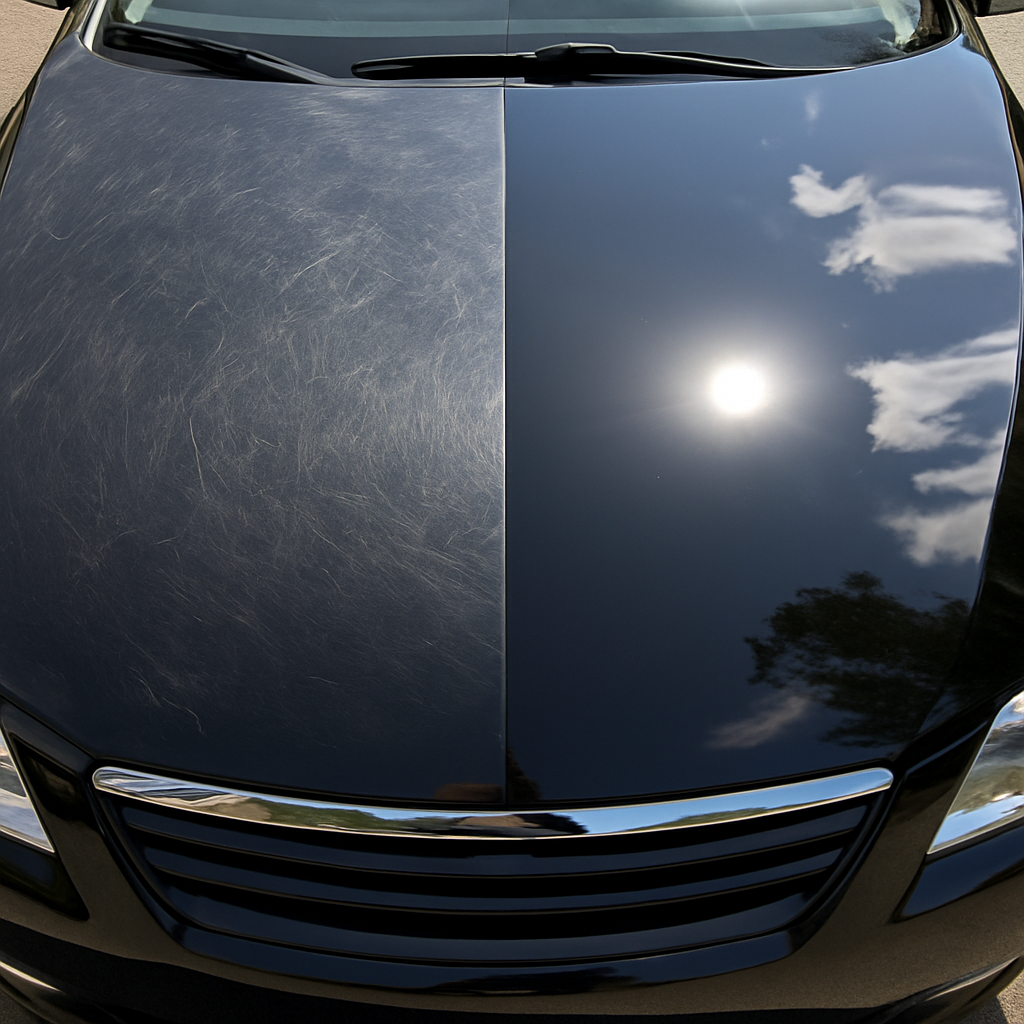
Look at your car’s finish in direct sunlight. Those tiny, spider’s web-like scratches are known as swirl marks, and they rob your paintwork of its depth and mirror-like shine. This is why the most important part of any professional coating job is paint correction. Before a coating is ever applied, a skilled technician spends hours performing careful swirl mark removal, using machine polishers to meticulously level the paint surface until it’s flawless. This process creates the jaw-dropping gloss that coatings are famous for.
So, what are you really paying for? The vast majority of a professional ceramic coating cost isn’t for the bottle of liquid itself. According to detailing industry data, up to 80% of the price covers the expert labour and time—often 8-12 hours or more—for this essential pre-application work. You’re investing in creating a perfect canvas, not just applying the final layer of protection.
The Real Superpower: Making Your Car Ridiculously Easy to Clean
A ceramic coating gives your car’s paintwork the same superpower as a new rain jacket. This hydrophobic effect means it repels water, causing it to form tight beads that whisk away dirt as they roll off. This “self-cleaning” property is a cornerstone of hydrophobic car paint protection and is the main reason maintaining a coated car is so much easier.
This slickness does more than just repel rain. Think about scrubbing off baked-on bug splatter or the panic of seeing a bird dropping on your bonnet. Because a ceramic coating is so smooth and chemically resistant, these contaminants have a much harder time sticking to and eating into your paintwork. This barrier buys you precious time to clean them off before they can cause permanent damage, known as contaminant etching. It also provides fantastic UV protection for car paintwork, acting like a powerful sunblock to prevent fading.
The number one day-to-day benefit is the simplicity of washing your vehicle. Dirt releases with minimal effort, often requiring just a gentle wash instead of aggressive scrubbing. This incredible resistance to dirt and environmental threats is where a ceramic coating truly shines. This slickness, however, is different from hardness. While a coating offers amazing protection against these issues, it isn’t a suit of armour for your vehicle.
The Hard Truth: What a ‘9H’ Coating Will (and Won’t) Protect Against
You’ve almost certainly seen “9H Hardness” advertised, but it’s crucial to know what this rating actually means. It refers to the coating’s ability to resist a scratch from the hardest type of pencil lead (a 9H pencil)—not from keys, stones, or other sharp impacts. In short, a 9H coating is highly scratch-resistant, but it is not scratch-proof.
Its real value is in the daily fight against the tiny scratches that dull your car’s shine. Those fine, spider’s web-like “swirl marks” you see in the sun are often caused by improper washing over time. A ceramic coating provides a hardened, sacrificial layer that resists this damage, preserving that deep, glossy finish for years instead of months.
A quality ceramic coating is designed to handle specific threats. For major impact protection from something like a stone on the motorway, a different product called paint protection film is the appropriate solution.
DIY vs. Pro: Why a £1,500 Professional Job Is Often Cheaper Than a £60 Bottle
A quick search reveals dozens of DIY ceramic coating kits for under $100. It’s a tempting proposition, but when comparing DIY vs professional ceramic coating options, you’re not looking at the same class of product. The coatings available to consumers are formulated to be more forgiving, which also means they are less concentrated and far less durable than the professional-grade versions a certified detailer uses.
The real danger of a DIY job isn’t just a weaker result; it’s the risk of a costly mistake. If the coating is applied unevenly or isn’t levelled off correctly, it leaves behind hazy, oily-looking streaks called “high spots.” Because the coating chemically bonds to your paintwork, these streaks are semi-permanent and require aggressive machine polishing by a professional to remove, a service that can easily exceed the original professional ceramic coating cost.
When you hire a professional, you’re paying for their expertise, specialised tools, and a controlled environment free of the dust that could ruin the finish. For a guaranteed, long-lasting result that truly protects your investment, finding a reputable expert for mobile car detailing and ceramic coating or a trusted local shop is the safest path.
How to Find a Top-Rated Ceramic Car Coating Specialist
How do you sort the experts from the amateurs? When you search for a ceramic coating specialist near you, the key is to look for signs of true craftsmanship and accountability. A great detailer is a partner in your car’s long-term care, not just someone selling a service.
To find certified auto detailing shops you can trust, use this simple checklist. Certification proves an installer has been professionally trained by the coating manufacturer, while business insurance is your non-negotiable safety net, ensuring you’re covered if any accidental damage occurs.
5-Point Installer Checklist:
- Check Google/Yelp for detailed reviews describing the customer’s experience.
- Scrutinise their website or social media for a portfolio with clear before-and-after photos.
- Ask if they are certified by a reputable coating manufacturer.
- Confirm they operate in a clean, well-lit, dedicated workspace.
- Verify they are fully insured to protect your vehicle.
Finally, be cautious of any price that seems too good to be true. A rock-bottom quote is the biggest red flag, almost always meaning the detailer is skipping the critical and time-consuming paint correction step. A true professional is proud of their meticulous process and will be transparent about it.
Your Car Is Coated. Now What? Simple Rules to Make It Last for Years
Getting the most out of your investment means making small adjustments to your maintenance routine. A ceramic coating makes your car incredibly low-maintenance, but not zero-maintenance. How to maintain a ceramic-coated car properly is the single biggest factor in its longevity.
The most important rule is to wash it correctly. Always use a gentle, pH-neutral soap—unlike harsh detergents, it won’t strip the coating—and adopt the two-bucket wash method. This technique uses one bucket for soapy water and a second for rinsing your wash mitt, preventing you from dragging dirt and grit back across the paintwork and causing scratches.
On that note, consider automatic car washes off-limits. Their abrasive brushes are a primary cause of swirl marks that will damage the coating’s finish. Even touchless automatic washes can be risky, as they often rely on aggressive, high-pH chemicals that can weaken the protective layer over time.
Finally, to keep the water-beading effect at its peak, your detailer may recommend a silica topper/booster. This is a simple spray-on product used every few months to revitalise the slickness and supercharge the hydrophobic car paint protection, keeping your car looking like it just left the shop.
So, Is a Ceramic Coating Worth the Money for You?
The world of ceramic coatings can be a confusing maze of technical jargon and glossy ads. In reality, a ceramic coating isn’t a magic shield but a powerful, semi-permanent layer of protection that delivers a deep, lasting shine and makes washing your car incredibly easy.
So, is a ceramic coating worth the money? It is, if you value your time and want to protect your vehicle’s appearance for the long haul. For many owners, it is the best paint protection for a new car or any car you take pride in, locking in that showroom look for years, not months.
However, the investment isn’t for everyone. If you’re looking for a cheap, temporary shine or expecting a force field against stone chips and door dings, this isn’t the solution. The cost reflects the meticulous paint preparation and the durable, long-term results it provides.
The best next step is to take a simple, low-risk action. Find a highly-rated local installer and schedule a free, in-person consultation to get an expert opinion and a precise quote for your specific car.