
There’s nothing like the flawless shine of a new or freshly detailed car. But every single drive exposes its perfect paint to threats, stones kicked up on the motorway, bug splatter, and harsh sun are all waiting to dull that finish. Keeping your car looking new used to just mean applying a coat of wax every few months.
Today, you’ve likely heard about high-tech ways to protect car paint, specifically Paint Protection Film (PPF) and Ceramic Coatings. These terms are often used interchangeably by dealerships and even some detailers, causing a lot of confusion. In truth, they are two completely different solutions that solve very different problems.
This guide breaks down exactly what each one does, what it protects against, and how to choose the best car paint protection for your vehicle, your driving habits, and your budget.
Think of PPF as a Screen Protector For Your Car
If your biggest worry is preventing physical damage, then Paint Protection Film (PPF) is the solution you need. Think of it as a durable, transparent screen protector, but for your car. This tough, flexible film is professionally applied directly to your vehicle’s paint, creating a nearly invisible shield against the hazards of the road. Its entire purpose is to be a layer of armour.
The film’s main job is to take the hit so your paint doesn’t have to. When a stone strikes your car on the motorway, the thick film absorbs the impact. This is the single most effective way to protect car paint from stone chips and prevent deep, unsightly scratches from keys or shopping trolleys. The film may get a mark, but the expensive paint underneath remains pristine.
Modern films are impressively clear and long-lasting, with high paint protection film durability often exceeding seven years. While its goal is to be invisible, its true value is rugged defence, not adding a slick, glossy feel. For that, we need to look at a completely different type of technology.
Why a Ceramic Coating is Like a Permanent Raincoat for Your Paint
While PPF is armour, a ceramic coating is more like a permanent, high-tech raincoat for your paint. Instead of a film, it’s a liquid that chemically bonds to your car’s finish, creating a hard, slick shell. This process delivers a deep, candy-like ceramic coating gloss and shine that traditional wax can’t hope to match, making your paint look perpetually wet and glossy.
The real magic lies in its incredible hydrophobic properties of ceramic coating. This means it makes your car repel water. Rain, splashes, and wash water bead up into tight spheres and roll right off the surface, taking dirt and grime with them. As a result, maintaining a ceramic coated car becomes almost effortless, dramatically cutting down on your cleaning time.
That slick shell also shields your paint from chemical stains from bird droppings and tree sap, as well as gradual fading from harsh UV rays. Remember, though, it’s a chemical shield, not physical armour, it won’t stop a stone chip. This distinction is key to choosing the right protection for your vehicle.
The Showdown: Physical Armour (PPF) vs. Chemical Shield (Ceramic)
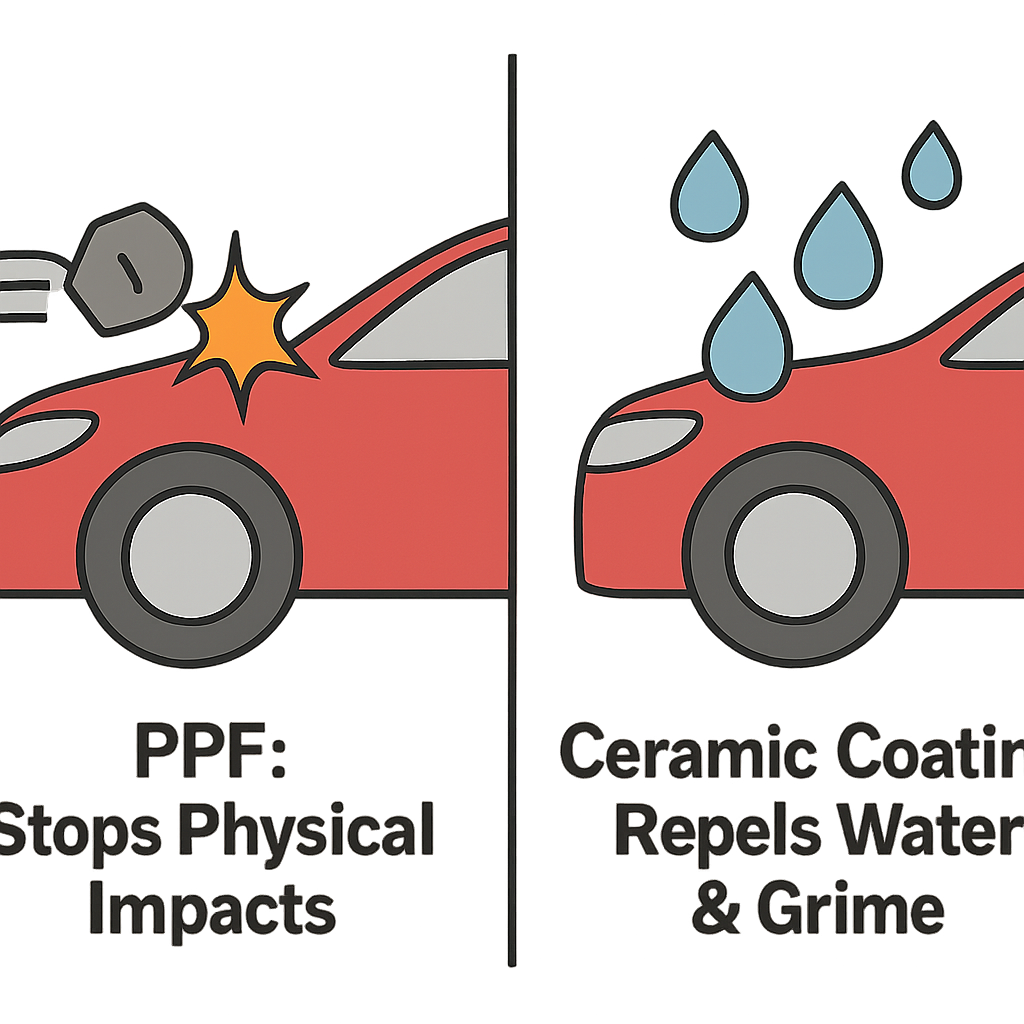
This brings us to the core of the ppf vs ceramic coating showdown. Imagine a small stone kicking up from a lorry on the motorway. With Paint Protection Film, that stone typically bounces off the film’s tough, absorbent surface, leaving your paint untouched. With only a ceramic coating, that same impact will likely leave a chip. PPF is physical armour designed to absorb these hits, making it the definitive way to protect car paint from stone chips.
Conversely, a ceramic-coated car is a dream to maintain. After a rainstorm, it will look dramatically cleaner than a car with only PPF, as its slick surface causes water to bead up and roll away, taking dirt with it. This leads many to ask, is ppf better than ceramic coating? The answer isn’t about which is ‘better,’ but which problem you’re trying to solve: sudden impacts or constant environmental grime.
Ultimately, you are choosing between different types of protection. If your daily commute on the motorway gives you anxiety about flying debris, PPF is your champion. If your main goal is a lasting, deep gloss and making car washes quick and easy, a ceramic coating is your winner.
What ‘Self-Healing’ PPF Really Means for Your Car
Many modern types of self-healing paint protection film have a remarkable ability: minor scratches and swirl marks on the film’s surface simply disappear. This isn’t science fiction. The fine scuffs you might get from a car wash brush or fingernails around a door handle can literally vanish, which speaks to the incredible paint protection film durability now available.
The way this works is that the process is activated by heat. Leaving the car out in the sun or even pouring warm water over the area can cause the film to return to its original smooth texture. While it won’t repair a deep gouge from a shopping trolley, this self-healing technology is fantastic at erasing the tiny battle scars of daily driving, keeping the film looking invisible and your paint perfect.
The Ultimate Combo: Using PPF and Ceramic Coating Together
After learning about both options, it can feel like you have to choose between the physical armour of PPF or the slick, chemical-resistant shell of a ceramic coating. But what if you didn’t have to? The common question, can you put ceramic coating over PPF?, has a simple and powerful answer: yes, absolutely.
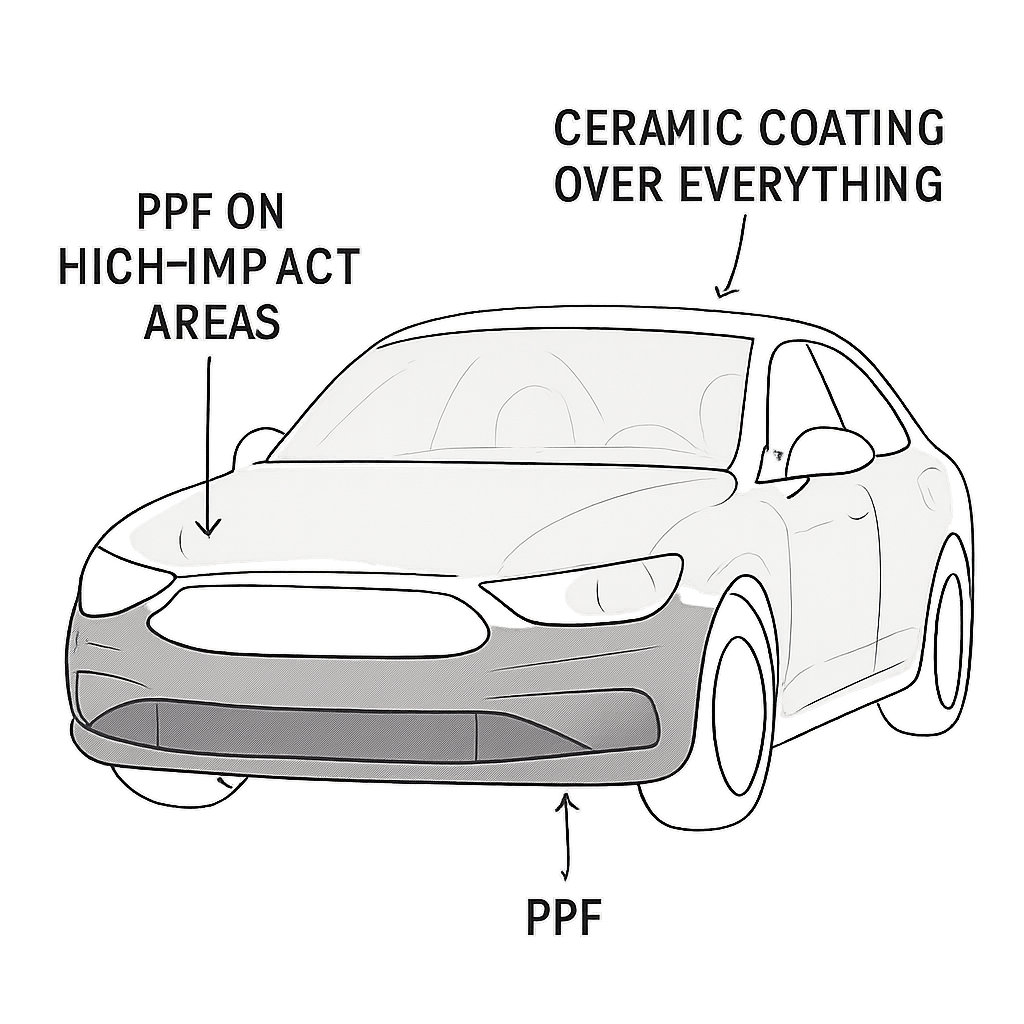
The most effective ceramic coating and ppf combination focuses protection where it’s needed most. As the diagram illustrates, installers often apply durable PPF to high-impact zones like the front bumper, bonnet, and wing mirrors. Afterwards, a ceramic coating is applied over the entire car, including right on top of the film itself.
This hybrid approach is widely considered the best car paint protection method because it leaves no gaps in defence. The PPF absorbs stone chips and scratches, while the coating provides universal gloss, UV resistance, and makes washing the entire car a breeze. You get the best of both worlds, creating a complete shield for your investment.
Your Final Choice: A Simple Checklist for Your Car and Budget
Seeing PPF and ceramic coatings as different tools for the job, rather than competing products, is the best approach. To make your final choice, here is a simple guide:
- Go for PPF if… your primary concern is preventing physical damage like stone chips and scratches from daily driving, and your budget allows for a higher initial investment.
- Go for Ceramic Coating if… your main goal is incredible shine, effortless washing, and protection from the elements for a lower initial cost.
- Go for Both if… you want no-compromise, ultimate protection and have the budget for the best of both worlds.
With a clear plan, you can now confidently decide on the best way to protect your car.