
Ever spent a Saturday washing your car, only to stand back and see a web of fine scratches shimmering in the sunlight? The problem isn’t the paint colour—it’s the clear coat, the transparent, protective layer on top. This is where your car’s deep gloss comes from, and those web-like scratches, known as swirl marks, are caused by rubbing dirt across the surface.
This reveals the true difference between a car wash and a detail. A basic wash, especially an automatic one with aggressive brushes, often focuses on removing surface dirt at the expense of the paint. Detailing, however, is a methodical, three-stage process designed to clean safely: it cleans the surfaces, decontaminates them from bonded grit, and applies a durable layer of protection. With a few simple changes in your technique, you can protect your car’s finish and create a lasting, professional-level shine.
The Two-Bucket Method: Your Best Defence Against Scratches
If you’re learning how to detail a car at home for beginners, the single most important change is the two-bucket wash method. Fill one bucket with car soap and a second with plain water for rinsing. After washing a single panel, dunk and scrub your dirty mitt in the rinse water to release the captured grit before reloading it with fresh soap. This simple habit is crucial for protecting car paint from the very scratches you’re trying to wash away.
Your choice of wash tool also matters immensely. A traditional sponge traps dirt against its flat surface, turning it into sandpaper. A plush microfibre wash mitt, however, has deep fibres that pull grit away from the paint, safely trapping it until you rinse it out. This combination is your one-two punch against swirl marks.
Finally, always wash your car from the top down. The roof, bonnet, and windows are the cleanest parts, while the lower panels and bumpers collect the most road grime. By saving the dirtiest sections for last, you keep your wash water cleaner for longer and minimise the risk of dragging heavy contamination across your entire car.
How to Get Paint as Smooth as Glass: Using a Clay Bar
Even after a thorough wash, your paint might not feel perfectly smooth. Those tiny, rough bumps are bonded contaminants—bits of road grime and industrial fallout that regular washing leaves behind. To feel them clearly, place your hand inside a thin plastic sandwich bag and lightly slide it across the paint. The bag amplifies the gritty texture, showing you why true paint decontamination is an essential next step.
A clay bar is the surprisingly simple solution. Paired with a lubricant spray to prevent scratching, you just glide the clay over a small, wet section. The tacky resin safely pulls the embedded grit out of the clear coat. Learning how to use a clay bar on a car is that easy: always keep the surface slick and let the clay do the work without applying heavy pressure.
After treating a panel, wipe the lubricant residue away and feel the result—the surface is now as smooth as glass. A perfectly prepped surface allows wax or sealant to bond better and last much longer.
The Pro’s Approach to a Truly Clean Interior
Tackling the interior relies on a few key items for your essential car cleaning supplies list:
- A quality All-Purpose Cleaner (APC) for dashboards and doors.
- An ammonia-free glass cleaner (safe for tinted windows).
- A soft detailing brush for vents and seams.
An All-Purpose Cleaner (APC) is one of the best auto detailing products for beginners because it safely handles grime on nearly any non-glass surface. The secret to a streak-free result is technique. Always spray cleaner onto your microfibre towel, not directly onto the dashboard, to prevent overspray on the windscreen and electronics. For dusty vents and tight seams, use your soft brush to gently lift the grime before wiping it clean.
How to Lock In the Shine and Protect Your Hard Work
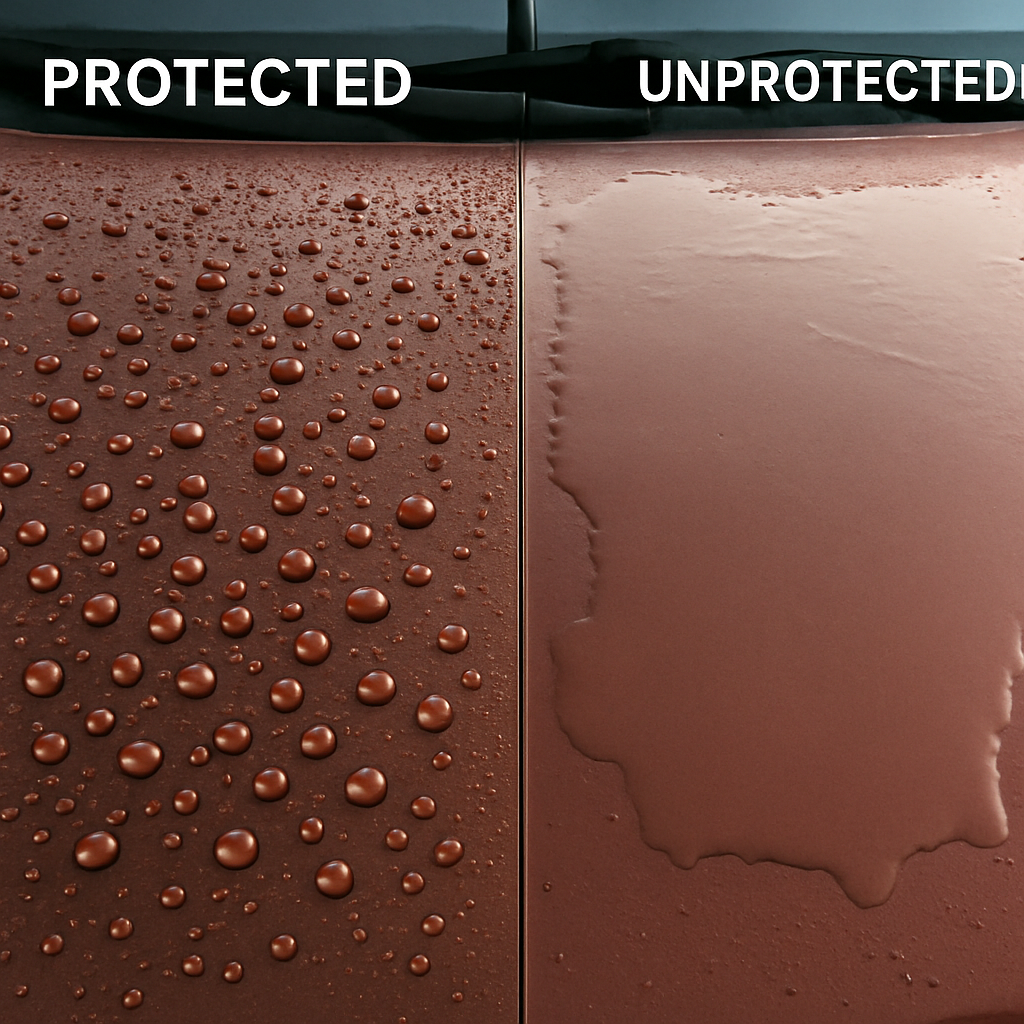
After all that cleaning, your car’s paint is perfectly smooth but exposed. Applying a car wax or paint sealant is a crucial barrier, protecting car paint from sun damage and locking in that deep gloss. This final step ensures your hard work doesn’t go to waste after the first rain shower.
A protected surface is hydrophobic, meaning it repels water. As shown in the image, water will form tight beads that roll right off, taking dirt with them instead of causing spots. This beading effect is the visual proof that your paint is shielded from the elements.
Your next wash will also be much easier, as dirt has a hard time sticking to the slick surface. While traditional wax lasts months, modern sprays with the benefits of ceramic coating technology can extend that protection even longer, making it the smartest way to preserve your car’s finish.
Protect Your Investment with Smarter Cleaning
You now understand what separates a simple clean from a true detail and how to care for your paintwork correctly. Rather than searching for a professional detailer, your first step is to try the two-bucket method next time you wash. This single change is the foundation for preventing the very swirls that require machine polishing to remove. You have the power to preserve your car’s finish, transforming a routine chore into an act of protecting your investment.