
You’ve likely seen a sleek matte-black SUV and thought about transforming your own ride. While debating a vinyl wrap vs custom paint job, remember that a premium wrap acts as a high-tech skin protecting your paint and resale value. According to automotive experts, however, that material is only as reliable as the person holding the blade.
Searching “Vehicle Wraps Near Me” is just the first step in avoiding a peeling exterior. Prioritising the lowest price often guarantees bubbling corners or jagged edges. Instead of choosing the cheapest local garage, you must learn to vet their work using the “3-Foot Rule” because a true professional’s installation should look completely indistinguishable from real paint.
Why ‘Cast Vinyl’ is the Only Choice for Your Car’s Contours
Seeing a massive price difference between quotes often comes down to the material’s “memory.” Budget “calendered” film constantly wants to shrink back to its original flat shape, causing nasty edge peeling within six months. Premium “cast” vinyl, however, “forgets” its flat shape during a professional vehicle wrap installation process, moulding flawlessly to your car’s complex curves.
Here is how they compare:
- Durability: Cast lasts 5–7 years; calendered degrades quickly on vehicles.
- Stretch: Cast hugs tight mirrors; calendered shrinks and bubbles.
- Best Uses: Cast for personal cars; calendered for flat commercial signs.
Demanding top-rated vinyl wrap brands like 3M or Avery Dennison guarantees this cast technology, maximising your car wrap warranty and durability. Yet, even the most expensive cast film will fail if applied incorrectly. The working environment plays a crucial role in preventing failure.
Evaluating the Shop: Why Dust is the Enemy of a Perfect Finish
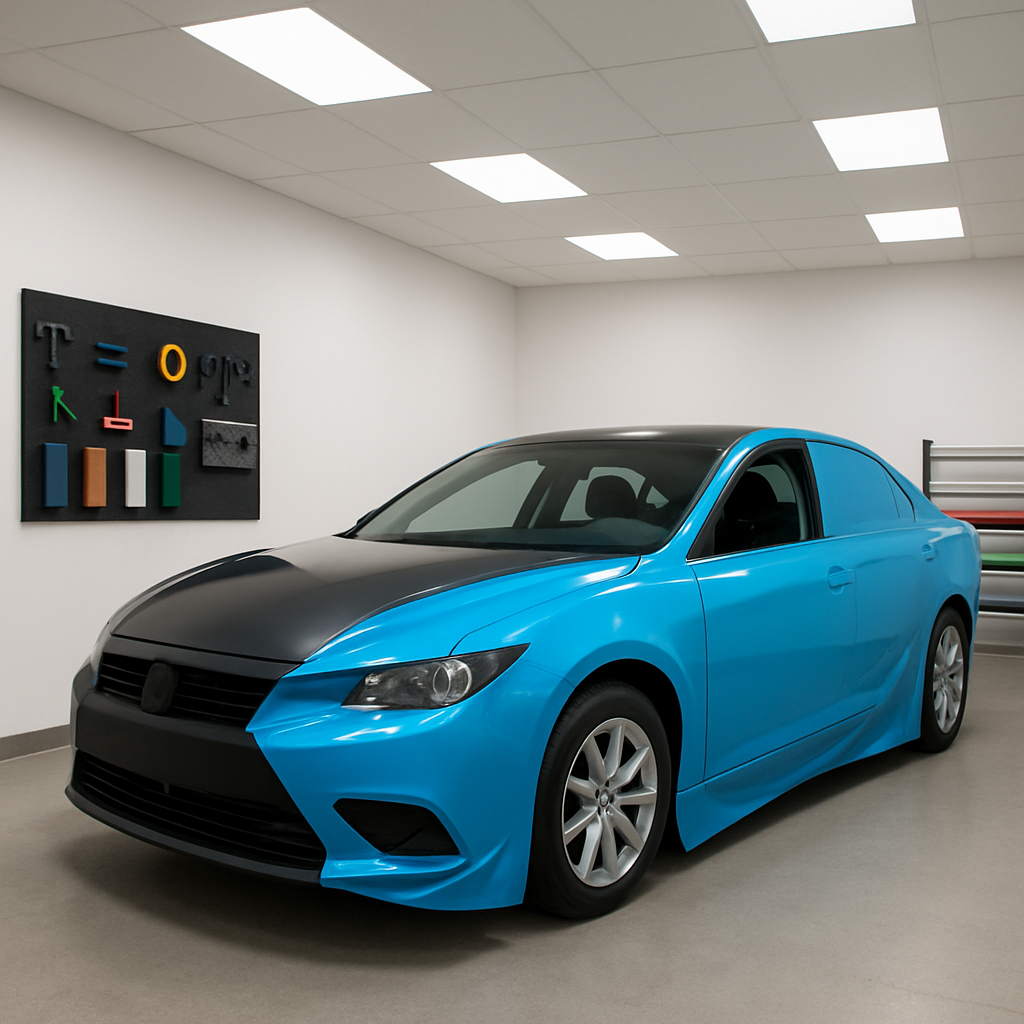
Touring a prospective shop should feel like entering a clean medical clinic, not a dusty mechanic’s garage. Elite installers always utilise dedicated decontamination zones, specialised wash areas where chemical strippers remove microscopic grime and old wax before installation begins. Wrapping a car without this intense cleaning is exactly like putting a plaster on a dirty knee; it will bubble and peel almost immediately.
Beyond immaculate floors, a climate-controlled wrap application facility maintains strict temperatures necessary for reliable thermal adhesion. This simply means the room is kept perfectly comfortable so the vinyl’s glue can properly activate and bond permanently to your paint without shrinking. Combining this ideal physical environment with a rigorous local car wrap shop portfolio checklist ensures your vehicle stays protected. Inspecting the vehicles leaving that room is the ultimate test of quality.
Spotting a ‘Hack’ Job: Using the ‘3-Foot Rule’ for Professional Quality
Scrolling through results for custom vehicle wraps requires looking past flashy hero shots to apply the “3-Foot Rule.” From three feet away, a quality finish must look exactly like factory paint, whether you are comparing full vs partial vehicle wraps. True professionals achieve this illusion by carefully removing exterior hardware, a process called de-badging, to wrap the sheet seamlessly underneath, rather than lazily cutting around objects. Inspect their physical portfolio for these details:
- Door handles: Is the original paint peeking through the gaps?
- Mirrors: Are there jagged cuts on the complex curves?
- Emblems: Did they properly de-badge or leave wrinkled borders?
- Corners: Are the vinyl edges neatly tucked without bubbling?
Spotting these signs of a bad car wrap job early saves you from premature peeling. Armed with these visual cues, asking the right questions forms the final line of defence against hidden shortcuts.
5 Essential Questions to Ask Before Handing Over Your Keys
Walking into a shop armed with the right questions separates a protected investment from a costly mistake. While knowing top-tier vinyl brands is a start, verifying the shop’s credentials ensures your car won’t look like a peeling sticker in six months. Use this checklist during your consultation:
- Are you certified 3M graphics installers? (This proves they passed rigorous, hands-on industry training).
- What is the difference between your labour warranty and the manufacturer’s car wrap warranty and durability limit? (The brand only replaces defective vinyl; the shop itself must guarantee against bubbling or peeling from bad installation).
- Do you carry garage keeper’s insurance for overnight protection?
- Will you remove door handles to tuck the vinyl, or simply cut around them?
- Do you exclusively use shrink-resistant cast vinyl?
Securing these answers protects your wallet and guarantees the correct installation techniques are followed behind closed doors.
From Surface Prep to Post-Heating: The Secret Steps to Longevity
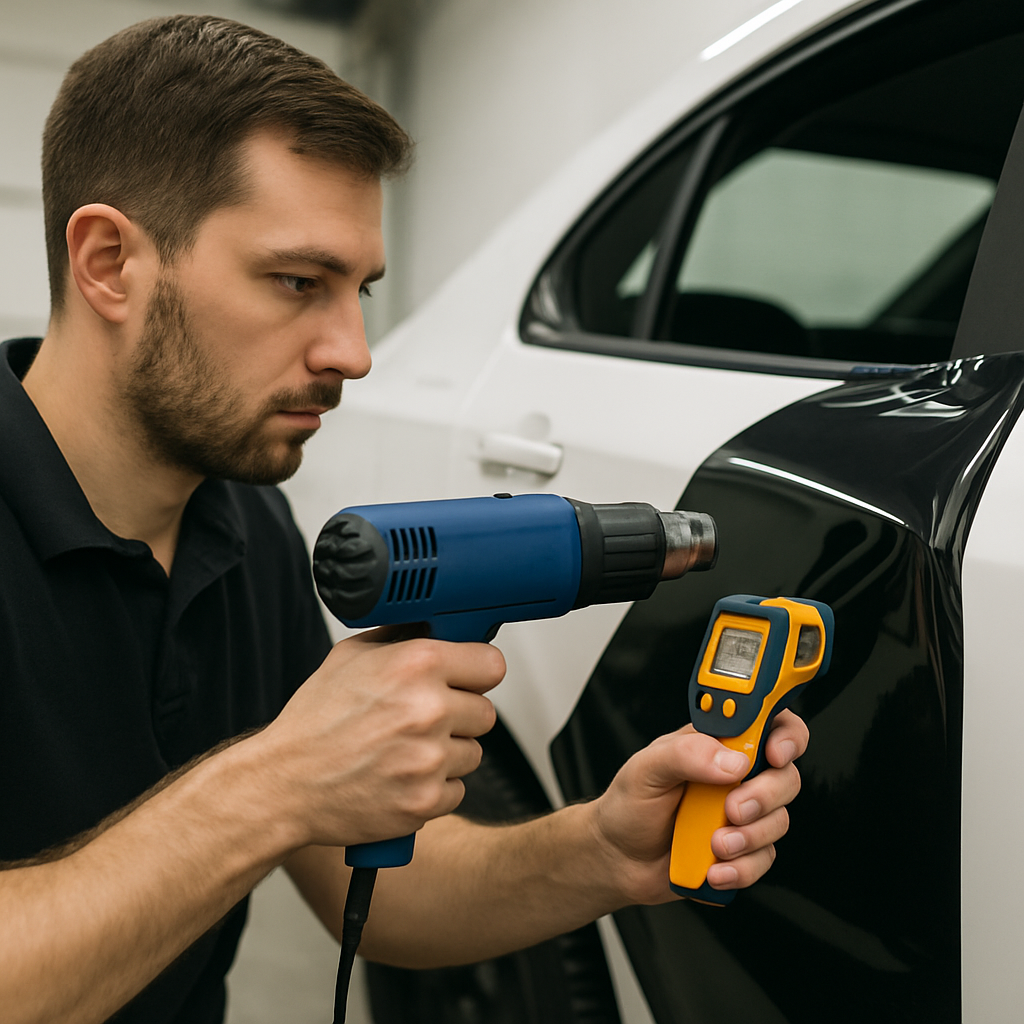
Proper surface preparation for a vinyl wrap requires intense chemical decontamination to strip away invisible wax and microscopic road grime. This exhaustive prep labour is one of the biggest vehicle wrap cost factors, ensuring the adhesive bonds directly to your paint rather than a hidden layer of dust.
Once the colour is applied, the installation relies on a crucial final defence against the sun: post-heating. Because high-grade film has “memory” and naturally wants to shrink back flat, installers use high temperatures to erase that memory and permanently lock it to the car’s curves. Understanding these hidden steps simplifies how to maintain vinyl car wraps long-term.
The Final Checklist: Moving From Search Results to a Stunning Vehicle
By weighing a studio’s pricing against their spotless facility and detailed portfolio, you can easily recognise a true professional vehicle wrap installation process. The closest garage isn’t always the safest choice for your paint.
Before handing over your keys, visit two or three local shops in person. Use this checklist at your first consultation to ensure your investment looks premium and lasts for years:
- Check the floors: Is the workspace clean and dust-free?
- Inspect the edges: Do portfolio photos show fully tucked corners?
- Ask about materials: Are they exclusively using high-grade cast vinyl?
- Verify the teardown: Will they remove door handles and mirrors?