
You’ve seen DIY kits for £600 online, yet a local pro shop just quoted you £4,000. That massive gap isn’t simply shop profit, it’s the difference between a seamless finish and facing the hidden risks of cheap DIY kits that peel after a month. Next to your home, your car is likely your most expensive asset, and a professional wrap acts as a protective “skin” guarding that investment.
Industry data reveals that wrapping a standard saloon, like a Toyota Camry, typically requires a baseline budget of £3,000 to £4,000. Looking entirely past the raw sticker price reveals what you actually pay for: skilled labour to carefully remove car parts, flawless edge tucking, and premium materials engineered to survive daily driving.
Paper Plates vs. Fine China: Choosing Between Cast and Calendered Vinyl
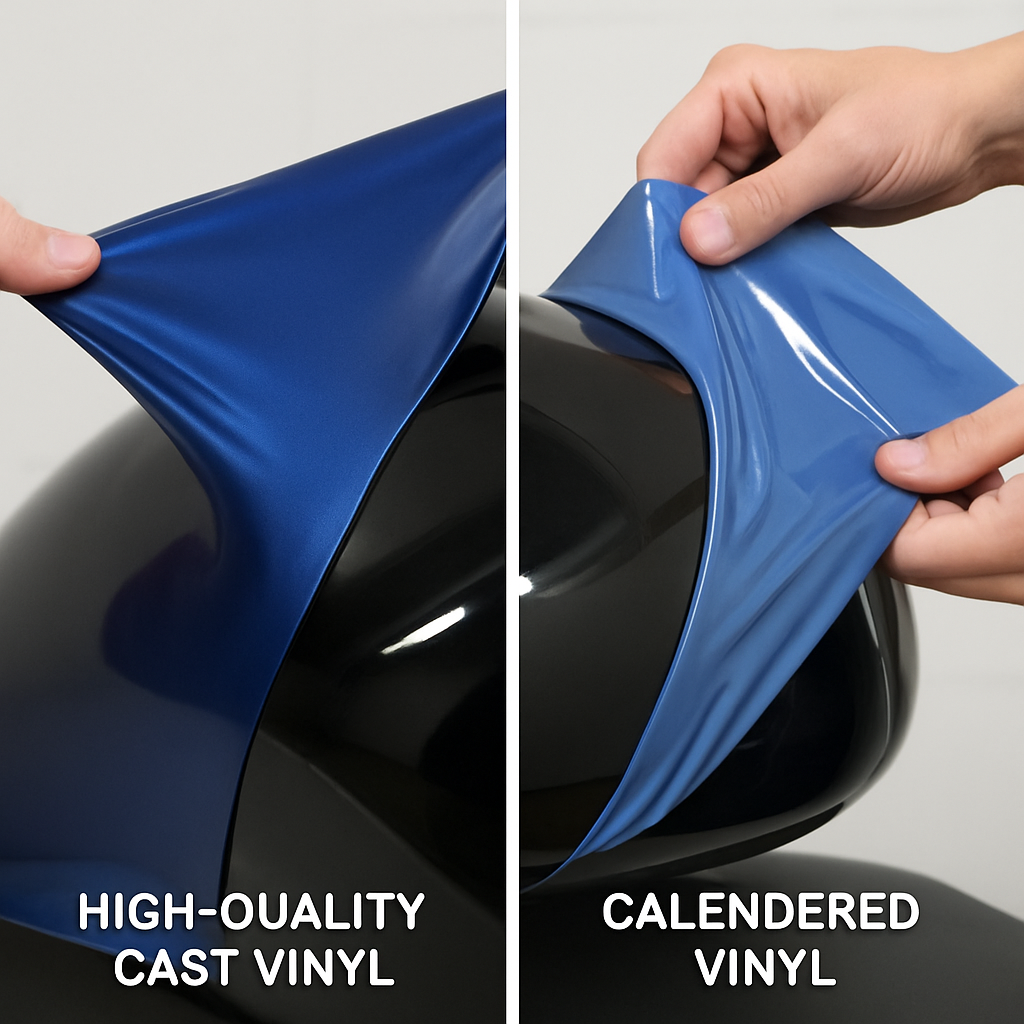
When comparing wrap materials, think of the difference between paper plates and fine china. Both temporarily do the job, but only one survives daily wear and the elements. In the auto industry, this means choosing between budget “calendered” vinyl and premium “cast” vinyl. Calendered vinyl is squeezed through heavy rollers, making it stiff and prone to shrinking. Conversely, cast vinyl starts as a liquid, so its internal structure stays relaxed, allowing it to mould effortlessly over your car’s unique shape.
This manufacturing process dictates whether your vehicle achieves a seamless painted look or a peeling stickered look. Here is how the two options compare:
- Flexibility: Cast vinyl easily hugs tight curves, while calendered material fights back and resists bending.
- Lifespan: When comparing cast vs calendered vinyl durability, cast survives 5 to 7 years, whereas calendered often fails within months.
- Guarantees: Choosing premium 3M vs Avery Dennison film quality unlocks reliable vinyl wrap manufacturer warranty coverage for total peace of mind.
Securing this high-grade material is the first step to protecting your investment, but the best vinyl cannot apply itself. That reality brings us to the hidden labour involved: gift wrapping a bowling ball, and why complex contours and “de-trimming” command a premium.
Gift Wrapping a Bowling Ball: Why Complex Contours and ‘De-Trimming’ Command a Premium
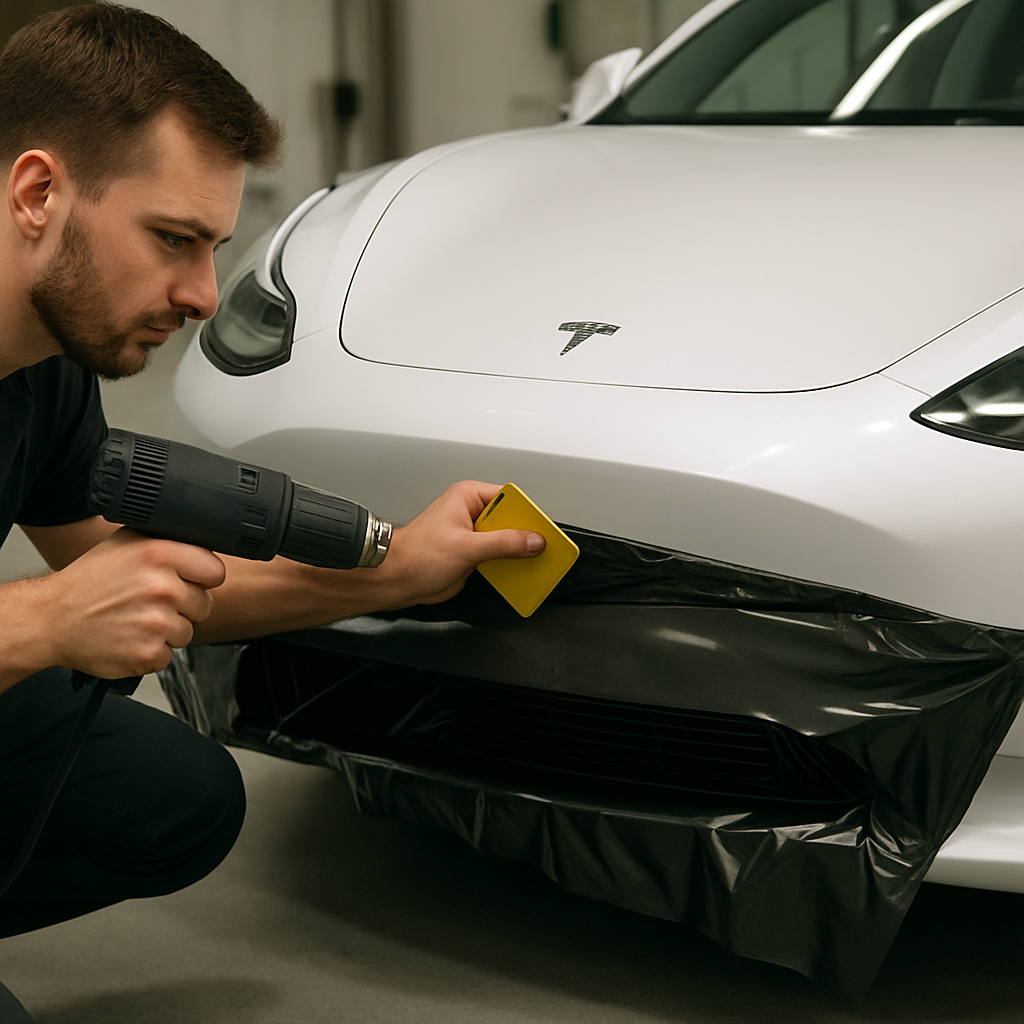
Have you ever tried gift wrapping a bowling ball? Wrapping a flat bonnet is relatively simple, but the real cost of a wrap lies in the curves. Before vinyl ever touches the paint, installers execute strict professional surface preparation requirements, utilising surface decontamination to strip away microscopic road grime. When evaluating car wrap quotes, a £3,000 price tag makes perfect sense once you realise it funds 30-plus hours of meticulous, manual labour.
This intensive work is heavily driven by the labour intensity of complex body contours found on vehicles like a Tesla Model 3 or a Jeep Wrangler. To avoid the dreaded “visible silver” problem, where your original paint peeks through the door gaps, shops perform a process called “de-trimming.” By carefully removing exterior hardware, installers can tuck the vinyl completely behind the panels rather than just cutting around them. A standard de-trimming process requires removing:
- Door handles
- Side mirrors
- Manufacturer emblems
- Headlights and tail lights
Once the edges are perfectly tucked, professionals finish with “post-heating,” a process of baking the vinyl so it permanently “remembers” its new curved shape without shrinking or peeling. With this foundation of labour understood, you can confidently decide how much of your vehicle you actually want to transform.
Mapping Your Coverage: From Full Wraps to the ‘Chrome Delete’
Changing your car’s entire colour isn’t the only way to upgrade its look. Understanding pricing variations by vehicle class starts with knowing how to estimate vinyl square footage. Simply multiply your vehicle’s length by three to find the needed material length, then multiply by the standard five-foot roll width. A standard Toyota Camry needs roughly 250 square feet of material, whereas a large SUV demands closer to 400.
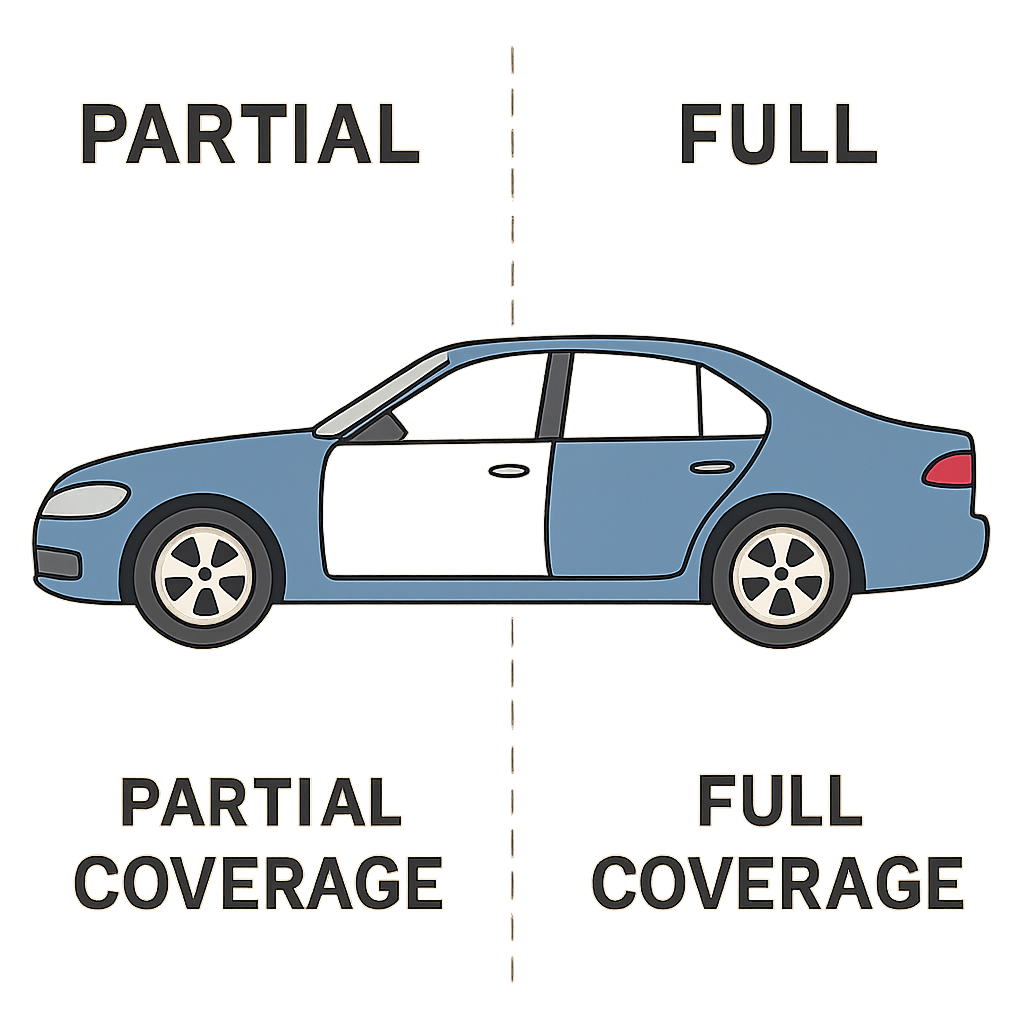
Armed with this basic maths, you can confidently explore full vs partial wrap coverage options. Sometimes, simply blacking out shiny factory window trims gives you a sleek, custom aesthetic without the massive bill. Keep in mind that specialty textures like carbon fibre or mirrored finishes will add 30-50% to your material costs. Here are typical coverage tiers for a standard saloon:
- Full Wrap: £2,500 – £4,000
- Partial Wrap: £1,200 – £2,000
- Roof Wrap: £200 – £350
- Average price for chrome delete: £300 – £800
Whether you choose a simple roof accent or a complete exterior overhaul, this new vinyl acts like a premium smartphone case for your original paint. To keep that custom “case” looking flawless against sun and street grime, proactive maintenance is essential.
Protecting the Investment: Ceramic Coatings, Maintenance, and Damage-Free Removal
Viewing a £3,500 premium wrap as a seven-year investment shifts the perspective, dropping your true cost to just £500 annually. Over those years, the vinyl acts as a “sacrificial layer,” absorbing the daily abuse of highway rock chips, bird droppings, and harsh weather. Because this physical barrier takes the beating instead of your factory clear coat, the original paint remains pristine underneath, drastically improving the positive impact of wrapping on resale value.
Sun exposure remains one of the biggest factors affecting vinyl wrap longevity, causing unprotected material to fade or become brittle over time. To prevent this UV degradation, installers highly recommend applying a ceramic coating for wrap protection. This liquid polymer chemically bonds directly to the vinyl, creating a microscopic, glass-like shield. Think of it as a permanent, high-end sunscreen for your car; it blocks the rays that bake the colour while making sticky tree sap wash off effortlessly.
Maintaining this healthy, flexible surface is exactly what guarantees a clean reversal down the road. When you are ready to sell, professional heat treatments ensure a completely damage-free vinyl wrap removal, leaving no stubborn glue behind. Knowing how this material ages prepares you to confidently choose your installer.
The Empowered Buyer’s Action Plan: Vital Questions to Ask Your Shop
You no longer have to guess what hides behind confusing car wrap quotes. You now understand the precise labour and premium materials required to achieve a durable, seven-year lifespan. Compare vehicle wrap pricing confidently by asking installers these vital questions:
- What brand of cast vinyl are you using?
- Do you remove the vehicle’s trim or just cut around it?
- Do you use knifeless tape to protect the paint?
Use this checklist to vet shops efficiently, ensuring your money buys lasting quality and a flawless finish.