
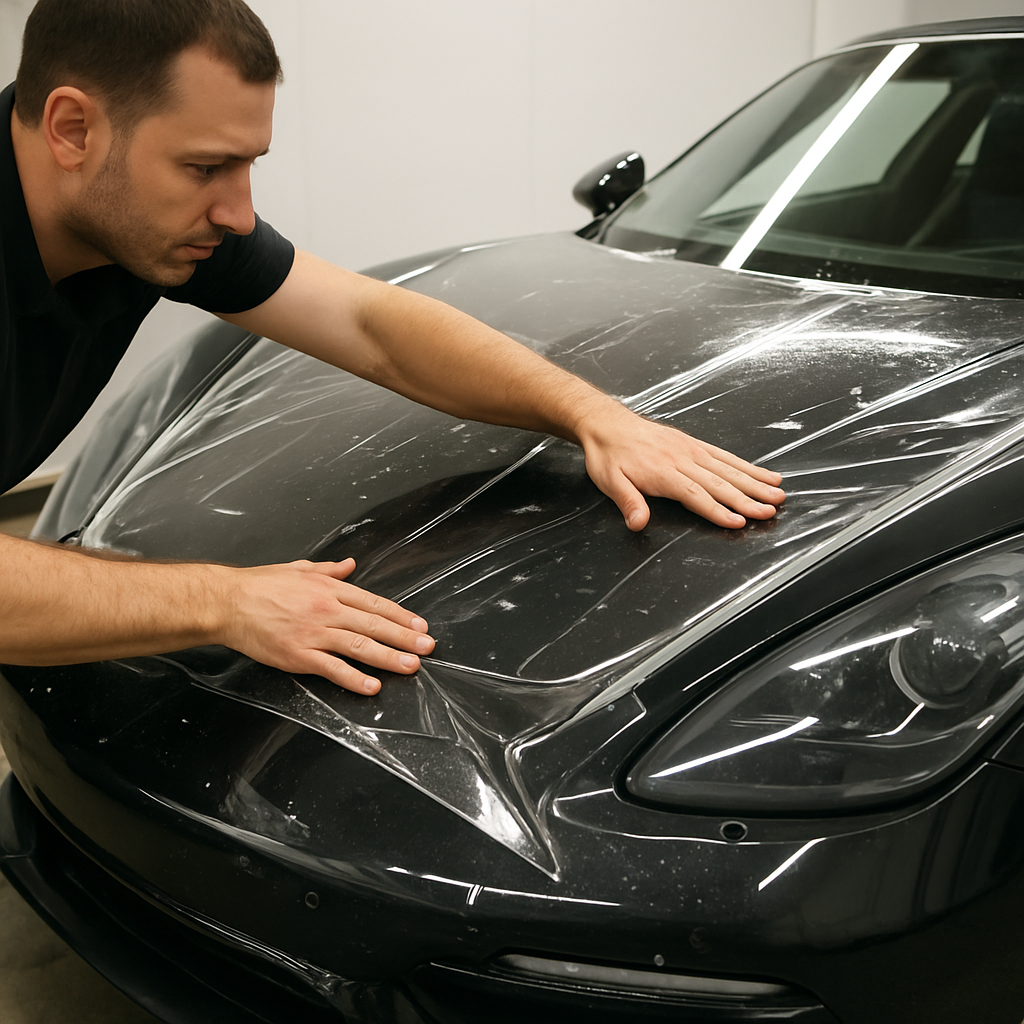
People mix up PPF and vinyl wrap because both are films fitted over a car’s paintwork. PPF is a clear film that shields the paint, while vinyl wrap is a coloured or printed film that changes the look. The simple difference is that PPF is mainly there to protect, and vinyl wrap is mainly there to change or refresh how the car looks. If you’re weighing up ppf vs vinyl wrap, the right choice depends on what matters most to you: keeping the original paint, changing colour, supporting a brand or looking after the car’s long-term value.
PPF vs vinyl wrap: what is the real difference?
PPF protects the paint. Vinyl wrap changes the look. That’s the core of it. Both can cover panels, both need skilled fitting and both can make a car look sharper, but they weren’t built to solve the same problem.
Start with why you’re looking in the first place. Say you’ve just bought a new Porsche, Range Rover, Tesla or BMW M car, or another high-value vehicle, and you already steer clear of loose gravel, tight car parks and fast A-roads. PPF is the logical protective choice. If the car looks tired, the colour no longer suits you or a company vehicle needs branding, vinyl wrap is usually the better fit.
What PPF is
Paint Protection Film, or PPF, is a clear protective film fitted to painted panels. Its job is to help defend against stone chips, light scratches, scuffs and general road wear before they mark the original paintwork. If you see paint as part of the car’s value, that matters.
A well-planned paint protection film installation can cover high-impact areas such as the front bumper, bonnet, wings, mirrors, door cups, sills and the boot access area. Full-car coverage is also possible when the aim is to keep as much factory paint as possible. People tend to choose PPF because they want the car to stay original, clean and impressive without having to explain what’s been done.
What a vinyl wrap is
A vinyl wrap is a coloured or printed film that changes how a car looks. It can give a full colour change, add a satin or gloss finish, black out chrome trim, freshen up older paint or turn a company vehicle into mobile branding.
Vinyl does give some surface cover, but it isn’t in the same league as PPF for protecting paint. Its main value is visual control. If your car is mechanically sound but looks flat, a wrap can change its presence quickly and reversibly, as long as the paint underneath is suitable.
Side-by-side comparison
Here’s how the two compare on the points most owners ask about.
| Factor | PPF | Vinyl wrap |
|---|---|---|
| Main purpose | Protecting original paintwork | Changing or refreshing appearance |
| Protection level | Stronger resistance to stone chips, scratches and road wear | Some surface cover, but not primarily protective |
| Appearance | Usually clear and discreet, though finishes vary | Wide choice of colours, finishes and branding options |
| Upkeep | Gentle washing and sensible aftercare | Careful washing, edge care and attention to sun exposure |
| Lifespan | Often chosen for longer-term preservation | Depends heavily on material, exposure, installation and care |
Treat the table as a starting point, not a verdict, because results depend on the film, the installer and how the car is used. When people search vinyl wrap vs ppf, they’re often really asking whether to protect the car or restyle it. That question keeps the decision honest. PPF is the preservation product, and vinyl wrap is the transformation product.
PPF vs vinyl wrap cost
Judge cost against the problem you’re trying to solve. A cheaper option isn’t better if it doesn’t protect the area you’re worried about, and a more protective option isn’t needed if all you want is a new colour.
Signatia’s published PPF packages start from the prices below. The right pack depends on which areas of the car you want covered.
- Essentials, £395: wing mirrors, door handle cups, kick plate and boot access.
- Frontend, £1,500: front bumper, bonnet, wings, wing mirrors and headlights.
- Track Pack, £2,100: everything in Frontend, plus side sills and rear quarters.
- Full PPF with Gtechniq ceramic coating, £3,950: full PPF protection with ceramic coating on top.
For more on protection pricing, read Signatia’s PPF cost article. Vinyl wrap prices are harder to pin down, so the car wrap cost article is a better guide than a guess. Wrap costs depend on vehicle size, film choice, finish, panel complexity and preparation. When you weigh up ppf vs vinyl wrap cost, the useful question isn’t only “what’s the price?” but “what would I be paying to avoid later?”
Which option suits your situation?
For a new or high-value car with excellent factory paint, PPF usually makes the most sense. It’s a proactive move, made before chips, scuffs and road debris start leaving their mark on the front end. If you care about resale value, originality and clean presentation, it’s asset management rather than vanity.
For an older car with tired paint, faded styling or a colour you no longer enjoy, vinyl wrap may be the better answer. It can refresh the look without committing you to a respray, provided the paint underneath is stable enough for wrapping.
For track-focused cars, PPF matters most around impact zones such as the front bumper, bonnet, mirrors, sills and rear quarters. Track use can be hard on paint, so protection belongs in the plan before the first event, not after the first visible damage.
For company vehicles, vinyl wrap is often the practical choice. Branding, logos, contact details and colour schemes can turn a van or car into a professional advert. PPF can still help on vulnerable areas, but the wrap usually leads.
Signatia is a Surrey-based specialist. It offers paint protection film, vehicle wrapping and colour changes, commercial wrapping, ceramic coating and car detailing, and serves Guildford, Woking and the wider Surrey area. That makes it a handy local choice for owners who want protection or styling handled properly.
Choosing a qualified installer
Even the best film disappoints if it’s fitted badly. Look for clean preparation, careful panel assessment, sensible advice and proof that the installer understands both protection and appearance. A good installer will tell you when PPF is right, when vinyl is right and when the paint needs attention first. They should also be happy to explain what they’ll do, which panels are covered and how to look after the film afterwards.
If you’re comparing local options, Signatia’s vehicle wraps guide can help you work out what to ask before you hand over the keys.
FAQ
Is PPF better than vinyl wrap? PPF is better at protecting paintwork. Vinyl wrap is better for changing colour, finish or branding. Neither wins outright, because they solve different problems.
Does vinyl wrap protect paint? Vinyl wrap gives light surface cover, but it isn’t designed to take stone chips and road wear the way PPF is. Choose it mainly for looks.
Can you have both PPF and vinyl wrap? Yes. Some owners use vinyl for a colour change with PPF over key impact areas, or fit PPF first where protection matters most. Talk through which goes on first, and how the two films work together, with your installer.
Does PPF change the colour? Clear PPF is meant to be discreet and keep the existing paint colour. Some specialist films can alter the finish, but traditional PPF is chosen for protection without an obvious visual change. If you’re curious about other options, get in touch with Signatia and ask what’s available.
How does color ppf vs vinyl wrap compare? If you’re comparing colour options, decide first whether protection or appearance is the main reason. Buyers asking this often want style and protection in one conversation, so it’s worth asking an installer what’s possible for your car.
Final guidance
Pick the option that protects what matters most to you. Choose PPF if you want to keep the original paint, cut down on avoidable cosmetic damage and keep the car feeling newer for longer. Choose vinyl wrap if you want a different look, a fresh finish or business branding.
Get in touch with Signatia to discuss whether PPF or a vinyl wrap suits your car.