
Ever opened your car door on a sunny day and been hit by a blast of oven-like air? That feeling, and a steering wheel too hot to touch, is a familiar problem. While many think tinted windows are just for a sleek, private look, their most valuable feature is something you can’t even see.
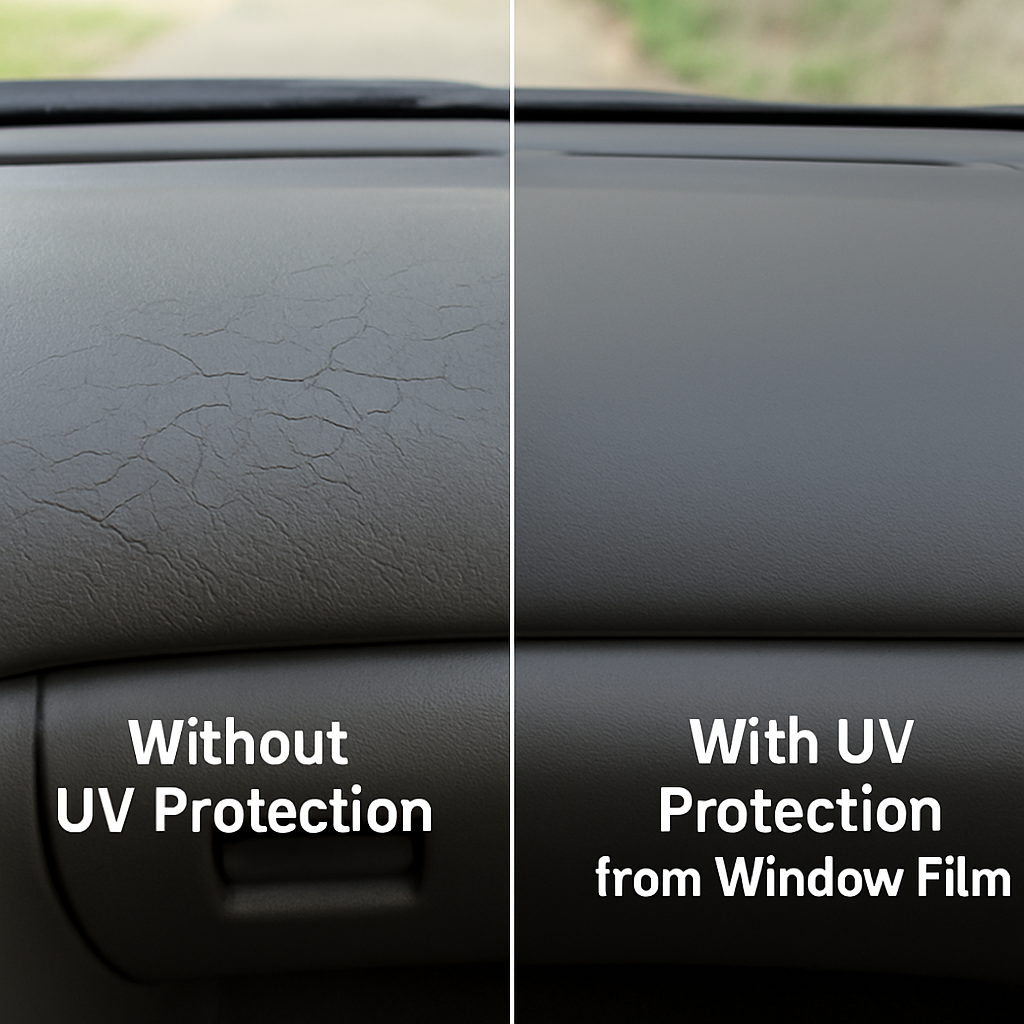
Constant sun exposure is also a leading cause of faded dashboards and cracked leather seats, according to car detailing experts. Add in the blinding glare during your commute, and it becomes clear that the sun is more than just an inconvenience. Modern window tinting is the single most effective way to reduce heat, block damaging rays, and cut down on dangerous glare. Forget the myths; here’s what you need to know.
More Than Just Looks: The Hidden Benefits of Window Film
While a sleek tint certainly adds style, its most important benefits are the ones you can’t see. Modern window film is a high-tech barrier that acts as a sunscreen for your car and its passengers. Quality films are engineered to block over 99% of the sun’s harmful ultraviolet (UV) rays, the same invisible rays responsible for sunburns and long-term skin damage.
Those same UV rays are also the primary cause of interior damage. Your dashboard, upholstery, and trim absorb sunlight day after day, leading to cracking, fading, and premature ageing. By stopping this damage before it starts, window tint helps to maintain your car’s appearance and resale value.
Finally, tint is a powerful safety feature. It dramatically reduces the blinding glare from the sun during the day and from oncoming headlights at night. This helps cut down on eye strain and allows you to see the road more clearly, making driving safer for everyone.
What ‘Tint Percentage’ Really Means for You (VLT Explained)
When you shop for window tint, the ‘darkness’ is measured by its Visible Light Transmission (VLT) percentage. This simply tells you how much visible light is allowed to pass through the window. The rule is simple: a lower VLT number means a darker tint.
A 5% VLT is what you might see on a limousine, offering maximum privacy by letting in only 5% of light. A more common choice is 35% or 50% VLT, which provides noticeable glare reduction without making it too difficult to see out at night. VLT is the key measurement used in window tinting laws, and each country or region sets a minimum legal VLT percentage. Choosing a film that’s darker than the legal limit can lead to a fine. But surprisingly, this number only measures visible light, not heat.
Why a Darker Tint Isn’t Always a Cooler Tint
You might assume that the darkest ‘limo tint’ is the best way to reduce heat, but the darkness of a film has little to do with its ability to block heat. Sunlight contains visible light, Ultraviolet (UV) rays, and Infrared (IR) light. You can’t see IR, but you can feel it as heat on your skin.
This is where the difference in tint quality shows. Basic, dyed films get their colour from dyes that absorb light but do very little to stop heat-causing IR rays. In contrast, higher-end films like ceramic are engineered with microscopic particles specifically designed to reflect and reject a huge amount of infrared heat without needing to be super dark.
A high-quality, lighter tint can keep your car dramatically cooler than a cheap, dark one. Think of it this way: a dark dyed film is like a black cotton shirt that absorbs the sun’s heat, while a modern ceramic film is like high-tech athletic wear that actively reflects it away.
Ceramic vs. Carbon vs. Dyed: Choosing the Right Film
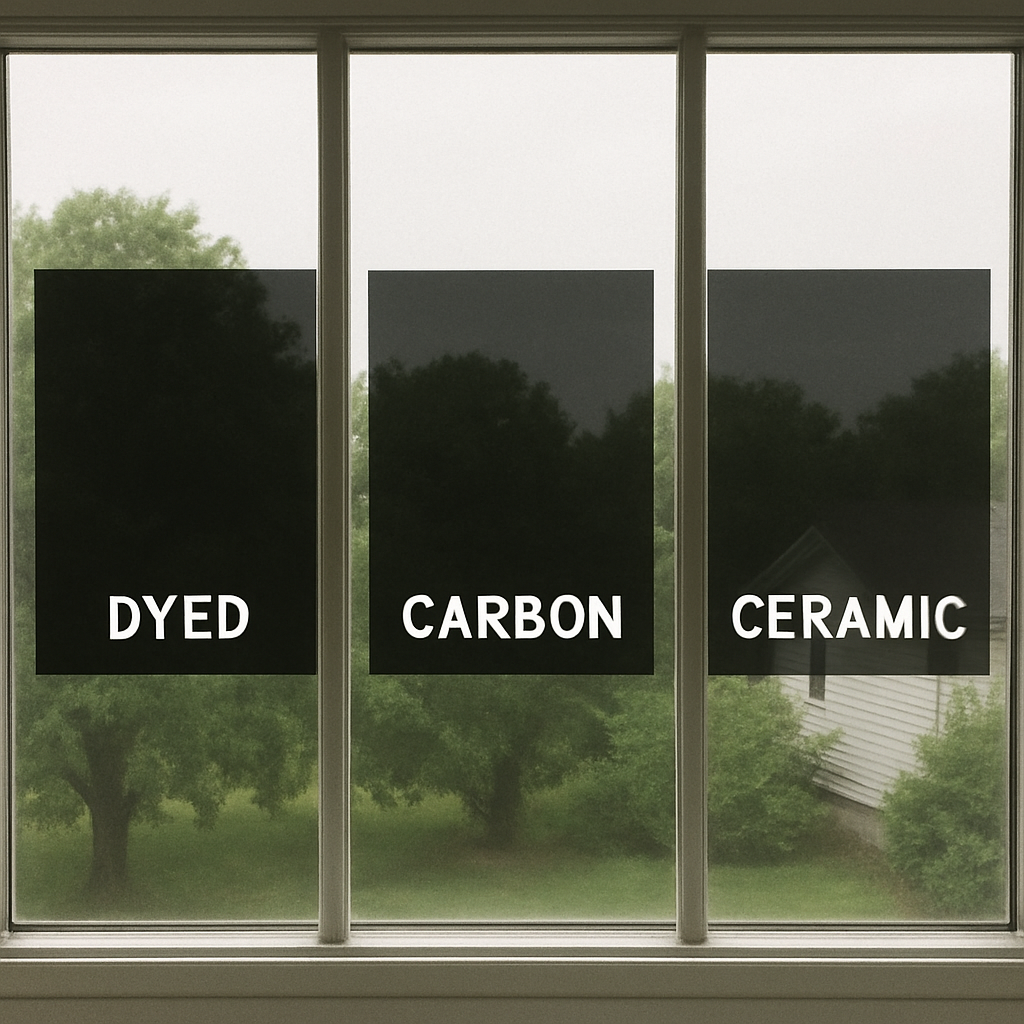
Shopping for window tint means choosing between different tiers for different needs and budgets. You’ll mainly encounter three choices: dyed, carbon, and ceramic. Each offers a unique balance of cost, appearance, and heat-blocking performance.
- Dyed Film: This is the most affordable option, perfect for adding privacy and a classic tinted look. Its main drawback is that the dye can fade over time, and it offers the least heat rejection.
- Carbon Film: A fantastic middle-ground choice. Carbon film gets its colour from carbon particles, meaning it will never fade or turn purple. It offers good heat rejection and excellent durability.
- Ceramic Film: The premium standard. Using advanced, non-conductive ceramic particles, this film excels at blocking infrared light without needing to be dark. It provides the highest performance and won’t interfere with mobile phone or GPS signals.
So, is ceramic film worth the money? If you live in a hot climate or prioritise maximum comfort, its superior heat rejection is a true game-changer. For many other drivers, however, carbon film hits the perfect sweet spot.
Is This Tint Legal? How to Check Your Local Laws
Before you commit to a shade, you have to follow the rules. There isn’t a single, nationwide standard for window tinting. Instead, local window tinting laws dictate what VLT percentage is legal, and the rules can change dramatically from one place to the next.
The rules are also specific to each window. Your front side windows almost always have the strictest VLT limits for safety. On your windscreen, tint is typically only allowed on the top few inches, down to a mark on the glass called the AS-1 line. Your rear side windows and back windscreen usually have more lenient laws.
Finding the official rules for your area takes less than a minute. Just search online for “[Your Country/Region] window tinting laws.” This will give you the exact VLT percentages you need to know. Keep in mind that if your vehicle already has privacy glass from the factory (common on SUVs), adding an aftermarket film will make the window even darker.
How Much Does Car Tinting Cost? (And Is DIY a Bad Idea?)
The cost to tint a car depends almost entirely on the film you choose. For a standard saloon, a basic dyed tint might run between £150 and £250, while a higher-quality carbon or ceramic film will typically range from £300 to £600 or more. This price reflects the advanced technology and the professional installation process.
You’re paying for an expert’s skill in a controlled environment. Installers work in clean bays to prevent dust from getting trapped under the film and use heat guns to perfectly shrink the film to your windows’ curves. This meticulous work is what separates a flawless finish from a botched job.
Tempted to save money with a DIY kit? Be warned: it’s much harder than it looks. DIY attempts often result in frustrating bubbles, creases, and trapped dust. Professional installation is an investment in getting the job done right the first time and almost always comes with a warranty.
Your 3-Step Tinting Action Plan
You now see tinting not just as dark windows, but as a powerful technology for comfort and protection. Follow this three-step plan to get started:
- Define Your Priority: Decide what matters most. Is it maximum heat rejection, privacy, or staying within a budget? Your answer will guide you between options like ceramic or carbon films.
- Check Your Local Laws: A quick search for your area’s legal VLT percentage is essential to ensure your choice is compliant.
- Get Quotes from Pros: Contact two or three reputable installers. Ask them what film brands they carry and why they recommend them.
With this knowledge, you can transform a confusing purchase into a clear, confident decision. Window tint is a tangible upgrade for your daily comfort and safety on the road.