
You know that sinking feeling when a stone pings off your car’s bonnet on the motorway? That sound is the number one enemy of a perfect paint job. For smart owners, there is an invisible shield that takes the hit so your paint doesn’t have to: Paint Protection Film (PPF).
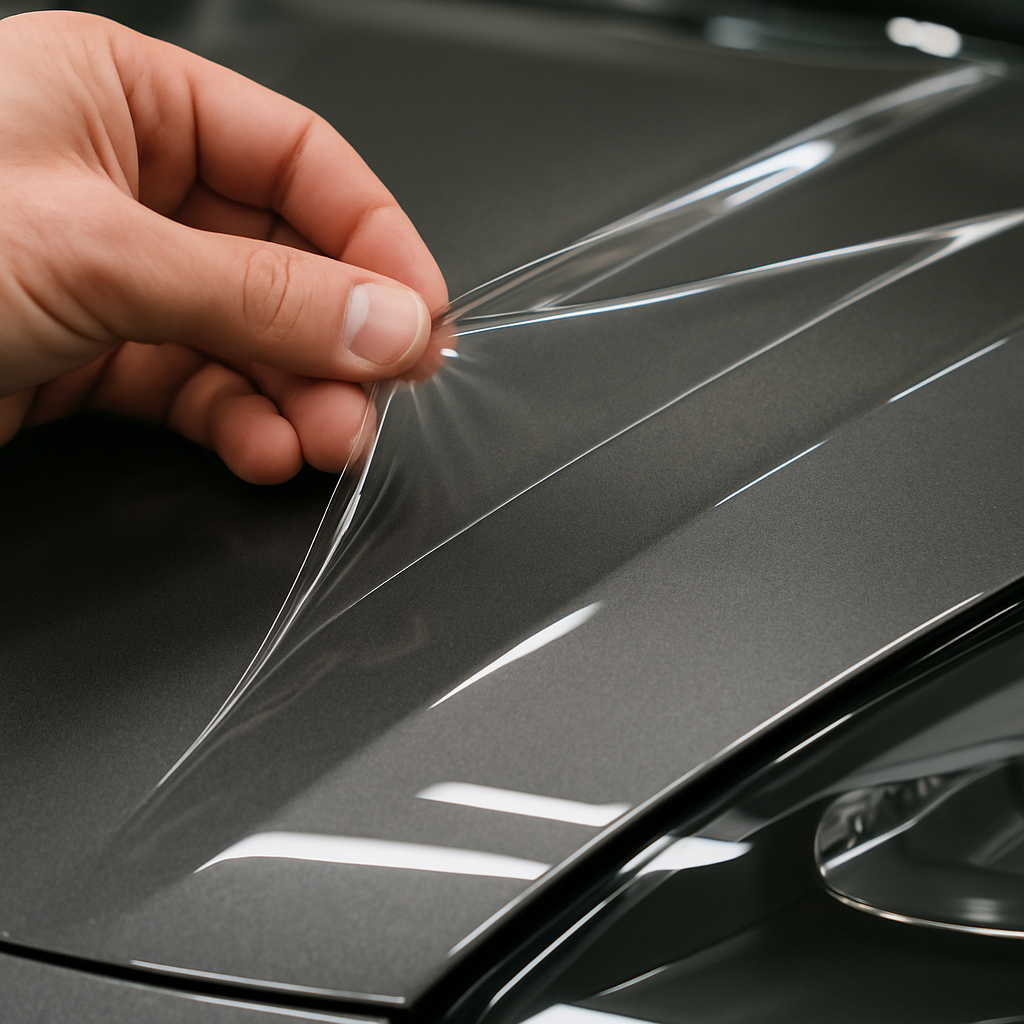
Think of it as a heavy-duty, self-healing screen protector custom-fit for your vehicle. This guide explains how this simple paint protection works.
The “Invisible Shield”: What PPF Actually Stops
This tough, flexible film is made from a material called thermoplastic polyurethane, and it acts as a physical shield. Unlike a thin vinyl wrap or a liquid coating, PPF provides real impact resistance you can count on.
What makes modern film so incredible is its self-healing technology. The material is engineered to “fix” itself, much like memory foam. When it gets a light scratch or swirl mark from a car wash, a little heat from the sun or some warm water causes the film’s surface to relax back to its original smooth state, making the damage disappear.
Ultimately, this invisible shield provides a powerful defence against the everyday enemies of your car’s finish, including:
- Stone chips and road debris
- Light scratches and swirl marks
- Bug splatters and bird droppings
- Fading from UV rays
PPF vs. Ceramic Coating: Choosing the Right Protection
A common point of confusion is the PPF vs. ceramic coating question. Though both protect your car, they are designed for entirely different jobs. It’s not about which is “better,” but which problem you need to solve.
The best analogy is clothing. PPF is a raincoat, a physical, clear paint protection shield that takes the hit from stones and scratches. A ceramic coating, on the other hand, is a wax jacket, a slick chemical layer that adds incredible gloss and makes cleaning easy, but it won’t stop a physical impact.
You don’t have to choose, however. For ultimate peace of mind, many owners get the best of both worlds by applying a ceramic coating over the PPF. This combines the impact-stopping benefits of the film with the brilliant shine and easy maintenance of a coating.
Is It Worth It? Cost vs. The Price of a Repaint
The upfront cost of PPF can seem high, but it’s best viewed as an investment. A single stone chip can lead to a bumper repaint costing hundreds, if not thousands, of pounds. PPF is designed to prevent that damage, protecting your paint and your wallet from unexpected repair bills.
For most daily drivers, the most popular option is the “full front” package. This covers the high-impact areas, your bumper, headlights, full bonnet, and side mirrors, that face a constant barrage of road debris. It’s the sweet spot for balancing cost and effective protection.
Protecting your car’s original factory paint is one of the single best ways to preserve its resale value. A car with a pristine front end is far more appealing than one that’s been repainted, and the cost of the film is often recouped when it’s time to sell or part-exchange it.
Your Next Step to a Chip-Free Car
This invisible shield delivers peace of mind on the motorway and protects your car’s value for years. Your most important step toward that protection is finding a quality paint protection film installation professional.Once the film is on, care is simple, knowing how to wash a car with PPF is as easy as washing it without.