
Ever wonder how some ten-year-old cars still look and feel almost new, while others seem tired and worn out? The owner of that impressive car likely isn’t handy with a spanner—they just know a few simple secrets to keeping their vehicle in top shape.
The difference comes down to one core choice: do you fix problems before they happen, or after? Waiting for a dashboard light or a strange noise almost always leads to a stressful, unexpected repair bill. It’s common knowledge in the auto repair world that reactive fixes, like replacing an engine part damaged by old oil, often cost many times more than the simple maintenance that would have prevented the issue. This preventative approach is the foundation of having a well-kept car, saving you thousands over its lifetime.
Forget intimidating technical manuals. This guide offers a clear, non-scary plan to build that confidence. You’ll learn the basic checks that make the biggest difference and how to spot small issues before they become disasters, so you can feel in control of your car’s health and your budget.
The 5-Minute Check-Up That Can Save You from a Breakdown
You don’t need a garage full of tools to spot trouble before it starts. One of the most powerful habits is a simple walk-around you can do in less time than it takes to make coffee. This quick car maintenance checklist helps you catch small issues before they become expensive headaches.
Simply take a quick loop around your car and:
- Glance at all four tyres to ensure none look low on air.
- Turn on your headlights and walk around to check all bulbs.
- Lift your wiper blades to inspect the rubber for cracks.
Your tyres and wipers are your first line of defence in bad weather. For tyres, it’s all about the tread—the deep grooves that grip the road. You can check this with the “penny test.” Just stick a penny into a tyre groove with Lincoln’s head upside down. If you can see all of his head, your tread is dangerously low, reducing your car’s ability to stop safely in the rain. Likewise, wiper blades that leave streaks, skip across the glass, or have visible cracks won’t clear your view in a sudden downpour.
A burnt-out brake light isn’t just a potential ticket; it’s a major safety risk that makes you less visible to other drivers. These functional checks are clear signs of a well-maintained vehicle.
What Really Makes a Car Look Old? Protecting Your Paint and Finish
While dirt and grime can make a car look neglected, what truly ages its appearance is sun damage. Think of your car’s shiny finish as having an invisible skin called a clear coat. Its job is to protect the colourful paint underneath from the sun’s harsh UV rays. Over time, this constant exposure breaks down the clear coat, causing the vibrant colour to fade and dull. Protecting car paint from the sun is the single best thing you can do to preserve that new-car shine.
The two most popular options are wax and ceramic coatings. Applying a wax is like putting a temporary jacket on your car; it provides a good layer of protection that needs to be reapplied every few months. A ceramic coating is a modern, professionally-applied liquid that chemically bonds to the paint, creating a much harder and longer-lasting shield. For new cars especially, it’s like giving the paint a permanent suit of armour against the elements.
However, the threat isn’t just from above. During winter, road salt and grime get kicked up and cake onto your car’s underbody, trapping moisture directly against the metal. This is a fast track to rust and corrosion. To prevent car rust, make it a habit to choose the underbody wash option at the car wash, especially after driving on gritted roads.

How to Keep Your Car’s Interior from Cracking and Fading
Just as the sun beats down on your paint, it also attacks your car’s interior, especially the dashboard. The constant heat and UV exposure can cause the plastic to fade, become brittle, and eventually crack. It’s tempting to grab a household all-purpose cleaner, but these products are often too harsh. They can strip away the plastic’s natural protective finish, accelerating the very damage you’re trying to prevent.
The secret to preventing this premature ageing is a dedicated UV protectant spray. Think of it as sunscreen for your car’s interior. Applying an interior protectant spray every month or so is one of the easiest and most effective DIY car detailing steps. It creates an invisible barrier that blocks harmful rays, nourishes the plastic, and leaves behind a rich, factory-new look instead of a greasy, artificial shine. This simple step is key to keeping your vehicle looking new for years.
For fabric seats, a simple solution of warm water with a few drops of laundry detergent works wonders. Lightly spray the spot, gently scrub with a microfibre towel, and then blot the area dry with a clean, separate towel—the key is to avoid soaking the cushion.
Under the Bonnet: The “Don’t Be Scared” Guide to Basic Fluid Checks
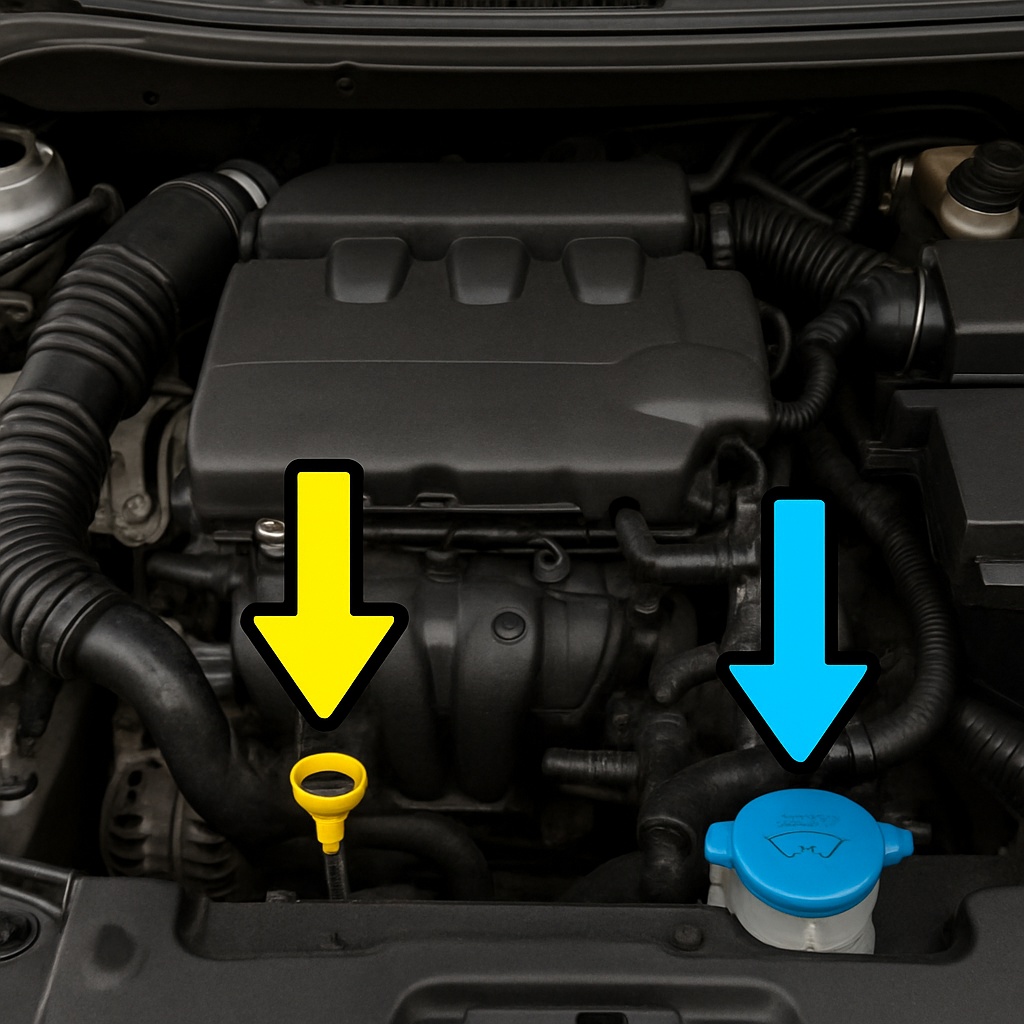
Lifting the bonnet can feel intimidating, but you don’t need a mechanic’s licence to perform the most common checks. Carmakers provide a helpful secret: brightly coloured caps and handles are your invitation to look. Think of yellow and blue as a “welcome mat” for a quick, safe inspection, while black caps are generally best left to the pros.
Your car’s most important fluid is its engine oil, and checking it is simple. Look for a small ring, often bright yellow or orange, which is the handle for the oil dipstick. With the car off and the engine cool, pull this long metal rod out, wipe it clean with a paper towel, push it all the way back in, and pull it out again. The oil level should be between the two marks near the bottom.
For an even easier win, find the windscreen washer reservoir. This is almost always a white plastic tank with a blue cap that has a little windscreen and water-jet symbol on it. If you can’t see the blue fluid inside, just pop the cap and top it off with washer fluid from any auto parts shop or supermarket. Keeping this full is one of the easiest signs of a well-maintained vehicle.
The Unseen Hero: Why a £40 Oil Change Prevents a £4,000 Engine Replacement
Just because your dipstick shows the oil level is correct doesn’t mean the oil itself is healthy. Engine oil is the blood of your car—it circulates, cleans, and protects. When new, it’s a slippery, golden-brown liquid. But over thousands of miles, the engine’s intense heat breaks it down, making it less slippery and filling it with grit and grime.
Eventually, that overworked oil can turn into a thick, black sludge. This gunk is the automotive equivalent of clogged arteries, blocking narrow passages and starving the engine of lubrication. This is a leading cause of premature engine failure, turning a simple maintenance task into a potential multi-thousand-pound catastrophe. The benefits of regular oil changes all boil down to preventing this one disastrous outcome.
You might have heard the old “change your oil every 3,000 miles” rule, but for most cars made in the last decade, a good preventative car maintenance schedule is closer to every 5,000 to 7,500 miles. To know for sure, check your owner’s manual, it provides the exact interval recommended by the people who built your car.
Beyond just fresh oil, the service itself provides huge value. A technician performs a quick, multi-point inspection, checking things like tyre wear, fluid levels, and belts. This is your first line of defence, catching small issues before they become expensive surprises. Documenting this care also builds a strong vehicle service history, which is a massive plus when it’s time to sell.
Your Car’s Simple Health Schedule: Beyond the Oil Change
With oil changes handled, the next step is to build on that good habit. A perfect task to pair with your oil change service is a tyre rotation. Your front tyres do the heavy lifting for steering, so they wear out much faster than the rear ones. A rotation simply swaps their positions, letting them wear down evenly as a team. This simple £25 procedure can often double the life of a set of tyres, saving you from a surprise £600 bill.
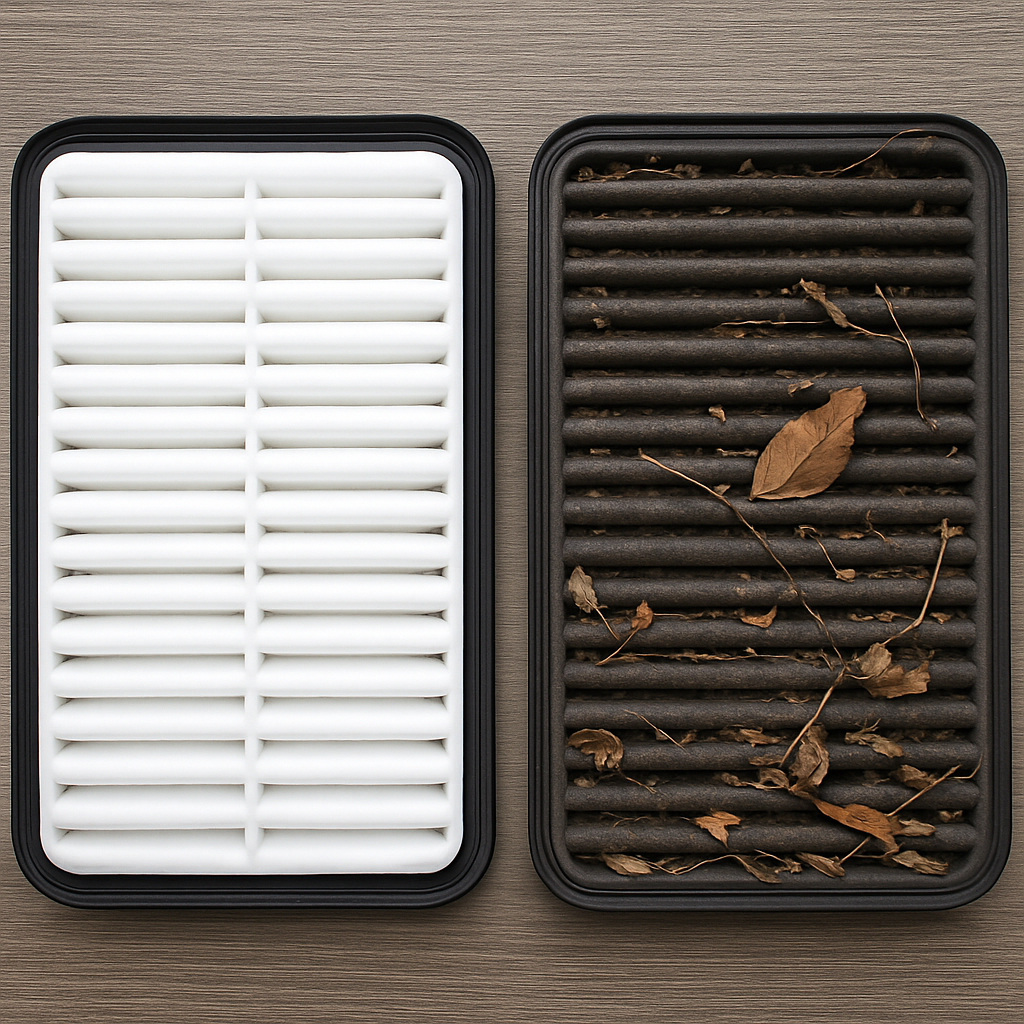
Your car also needs to breathe, which is where its filters come in. The engine air filter acts as your car’s lungs, stopping dust and road grime from getting into the engine. When clogged, the engine has to work harder, which hurts your power and wastes petrol. The cabin air filter does the same job for the air you breathe inside the car, keeping it clean and your A/C smelling fresh.
- Every 6 Months or 1 Oil Change: Rotate Your Tyres.
- Once a Year (~12,000 miles): Replace Engine & Cabin Air Filters.
- Every 2 Years: Inspect Wiper Blades (and replace if streaky).
Sticking to a rhythm like this does more than just save you money; it creates a documented paper trail of excellent care, which is one of the best ways to increase your car’s resale value.
The Single Best Way to Increase Your Car’s Resale Value
That paper trail is called a vehicle service history, and it’s your secret weapon for getting top dollar when you sell. It proves to the next owner that every oil change, tyre rotation, and filter replacement was done on time. For a buyer, this documentation removes the fear of the unknown, giving them the confidence to pay a premium. A car with a detailed service history can often sell for £500 to £1,500 more than an identical one without it.
Creating this record is easy. Grab a simple folder and keep it with your car’s owner’s manual. Every time you have your car serviced, ask for a receipt and tuck it inside. This small habit transforms random slips of paper into a powerful, chronological story of excellent care.
When you sell your car, that folder becomes your proof. Instead of just saying, “I took great care of it,” you can hand over tangible evidence that you invested in its health all along, building trust and justifying your asking price.
Your Blueprint for a Car That Lasts
Before, your car might have felt like a source of stress and surprise bills. Now, you have a clear roadmap to see it as a machine you can manage. Confidence behind the wheel isn’t just about driving—it’s about knowing you’re in control.
All the advice for creating well-kept cars boils down to three simple habits: Look at your car regularly, Protect its surfaces inside and out, and Schedule the essential services. This simple framework is your secret weapon against big repair bills and helps increase your car’s resale value.
Ready to put this knowledge into action? Here is your 7-Day Action Plan:
- Do the 5-minute walk-around you learned about this week.
- Schedule your next oil change in your phone’s calendar right now.
- Buy a bottle of interior protectant and a simple folder for your service receipts.
You’ll soon see other well-kept cars not as a sign of wealth, but as a sign of smart ownership. This was never about becoming a mechanic; it’s about becoming an empowered owner who enjoys greater reliability and peace of mind.