
There is nothing quite like the sheer thrill of threading your car through a challenging sequence of corners on a racing circuit. Whether you are attacking the apexes at Silverstone or tackling the elevation changes of Brands Hatch, pushing your vehicle to its limits is profoundly rewarding. However, the harsh reality of circuit driving is that it can absolutely devastate your car’s exterior. Sticky tyres kick up a relentless barrage of stones, rubber marbles, and abrasive dust at terrifying speeds.
If you want to maintain your vehicle’s pristine finish without compromising your lap times, you need a robust strategy. Implementing a comprehensive track day paint protection plan for drivers who push their cars hard is not just an optional luxury; it is an absolute necessity.
In this guide, we will break down the most effective methods to shield your bonnet, wings, and bumpers from the unavoidable onslaught of debris. From permanent polyurethane shields to temporary track tapes, here is how to keep your pride and joy looking immaculate, both on the circuit and the drive home.

The Harsh Reality of Circuit Driving
Before we delve into the solutions, it is vital to understand what your vehicle is up against. When you are travelling at high speeds, aerodynamic forces press your car into the tarmac, while the vehicle ahead of you acts as a mechanical vacuum, firing debris directly at your front bumper.
This high-speed friction leads to two primary issues:
- Sandblasting: The constant impact of tiny particles dulls and pits your clear coat. Preventing paint sandblasting on race tracks requires a physical barrier, as wax alone simply will not cut it.
- Rubber Transfer: As hot track tyres degrade, they shed molten rubber (“marbles”) which smear heavily onto your paintwork, baking onto the surface alongside hot brake dust.
By understanding these hazards, you can tailor your track day prep to ensure your paintwork survives the weekend unscathed.
Permanent Solutions: The Ultimate Car Paint Shield
For the dedicated enthusiast who spends multiple weekends a year at the circuit, investing in permanent protection is the most cost-effective and stress-free route.
Paint Protection Film (PPF)
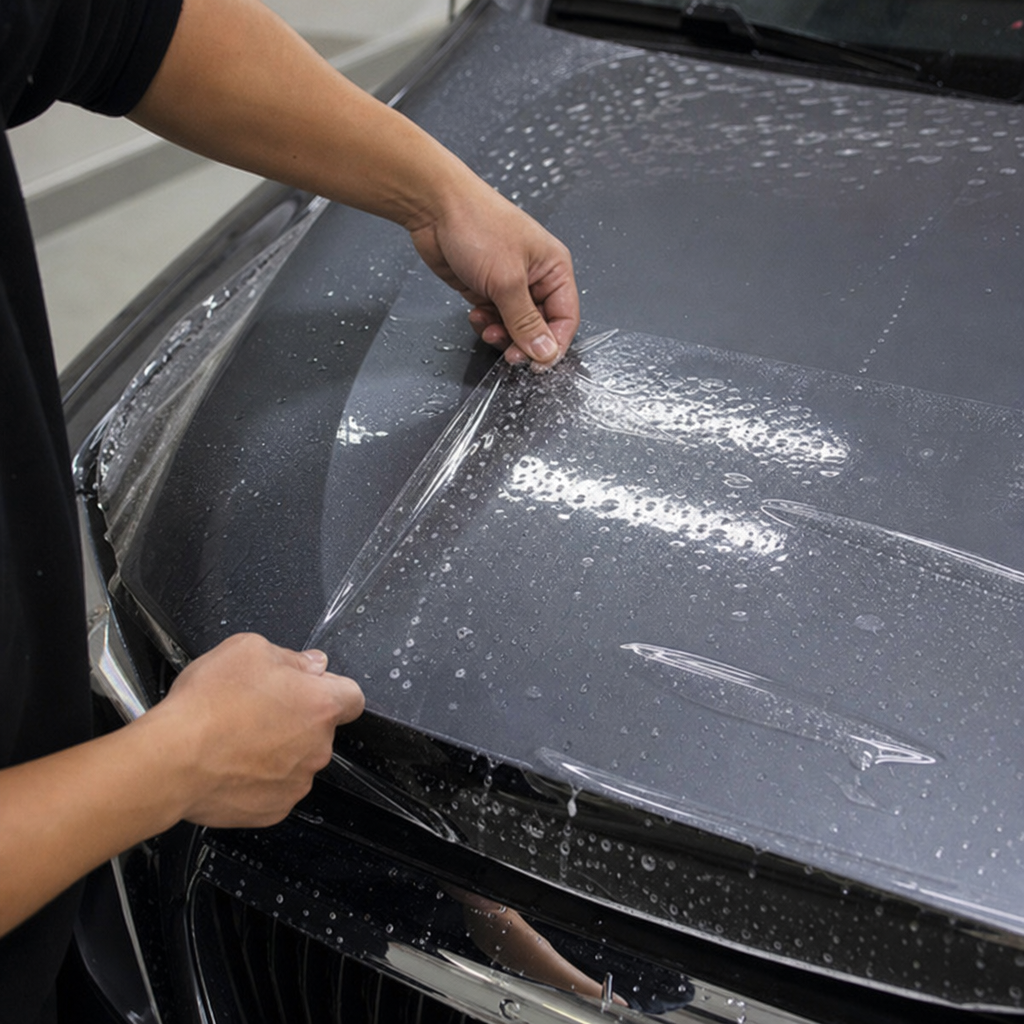
At the top of the hierarchy is paint protection film. This transparent, ultra-durable layer acts as an invisible armour over your vehicle’s factory clear coat. For serious drivers, a standard film might not be enough. Instead, you should look into a heavy duty polyurethane film for racing. These thicker films (often 10 mils or more) are explicitly designed to absorb the kinetic energy of flying debris.
If you are looking for the gold standard in high impact stone chip prevention, you should seriously consider self healing PPF for circuit driving. These advanced films possess a top layer comprised of elastomeric polymers. When exposed to heat—either from the sun or a heat gun—light scratches and swirl marks magically level out and disappear. It acts as the ultimate car paint shield, allowing you to drive hard without wincing every time you hear a stone strike the bonnet.
Ceramic Coating vs Paint Protection Film for Track Use
A common debate in the paddock is ceramic coating vs paint protection film for track use. It is crucial to understand that these two products serve entirely different purposes.
A ceramic coating is exceptional at repelling water, enhancing gloss, and making the car significantly easier to wash. However, it offers almost zero impact resistance. A ceramic coating will not stop a piece of gravel travelling at 100 mph.
PPF, on the other hand, provides a thick, physical barrier against impacts. For the best of both worlds, many track day veterans apply PPF to the high-impact areas (front bumper, bonnet, wings, and side skirts) and then apply a ceramic coating over the top of the film and the rest of the car. Additionally, applying a heat resistant paint protection for high speed areas—such as near the exhaust tips—can prevent carbon build-up and heat discolouration from aggressive driving.
Wrapping Track Cars
For those who want to change their vehicle’s aesthetic whilst adding a layer of defence, impact resistant car wraps for track cars are an excellent alternative. While vinyl wraps are generally thinner than dedicated PPF, modern high-grade automotive vinyl still provides a commendable level of track day paint protection against minor abrasions and sandblasting.
Temporary Protection for the Weekend Warrior
If your track visits are infrequent, or if you simply cannot justify the cost of full PPF right now, do not despair. There are several highly effective temporary solutions available.
Clear Adhesive Films and Track Tapes
One of the most popular paddock hacks is the use of a temporary track day paint protection clear adhesive film. Unlike permanent PPF, these products are designed to be rolled onto the car on Friday night and peeled off on Sunday evening. They provide a surprisingly tough barrier against rubber smears and minor stone strikes.
When weighing up temporary track tape vs permanent film, the primary differences are aesthetics and convenience. Permanent film is practically invisible and requires no setup on the day. Temporary tape is often visible (sometimes available in different colours, though clear is preferred by many) and requires an hour of meticulous application.
If you are wondering how to prevent track day rock chips on a budget, high-quality track tape is your best friend.

How to Apply Track Day Protective Tape
Applying tape might seem straightforward, but doing it correctly ensures it stays attached at triple-digit speeds. Here is how to apply track day protective tape effectively:
- Clean the Surface: Ensure the paint is thoroughly washed, dried, and free of any waxes or quick detailers that might prevent adhesion.
- Start from the Bottom: Apply the tape starting from the lowest point of the bumper and work your way up, overlapping the strips slightly. This creates a shingle effect, preventing high-speed wind from getting under the edges and peeling the tape back.
- Smooth the Edges: Use a microfibre cloth to press down firmly on all edges to ensure a secure bond.
- Protect the Vulnerable Spots: Do not just focus on the bumper. Apply tape to the leading edge of the bonnet, the wing mirrors, and the areas just behind the wheel arches where sticky tyres will inevitably flick debris.
Protecting Headlights
A cracked headlight lens can result in an MOT failure and a hefty replacement bill. Therefore, protecting headlights from track debris should be a top priority. Use a specialized, thick, clear protective film specifically cut for your light housings. The lenses are right in the firing line, and a high-impact film will absorb the shock of flying gravel, saving the expensive plastics or glass underneath.
The Morning After: Post-Track Triage
No matter how meticulous your temporary track day paint protection strategy is, your car will inevitably come home wearing the battle scars of a hard-driven weekend. Hot brake dust, molten rubber, and bug splatters need to be addressed promptly before they etch into your clear coat.
Follow this post track day car cleaning guide to safely restore your car’s showroom shine.
1. The Pre-Wash Phase
Never take a sponge directly to a track-soiled car. Begin with a high-quality citrus pre-wash or a dedicated snow foam. Allow it to dwell on the paintwork for several minutes to break down the heavy soot, brake dust, and unburned fuel deposits. Rinse thoroughly with a pressure washer, working from the top down.
2. Track Rubber Scuff Removal
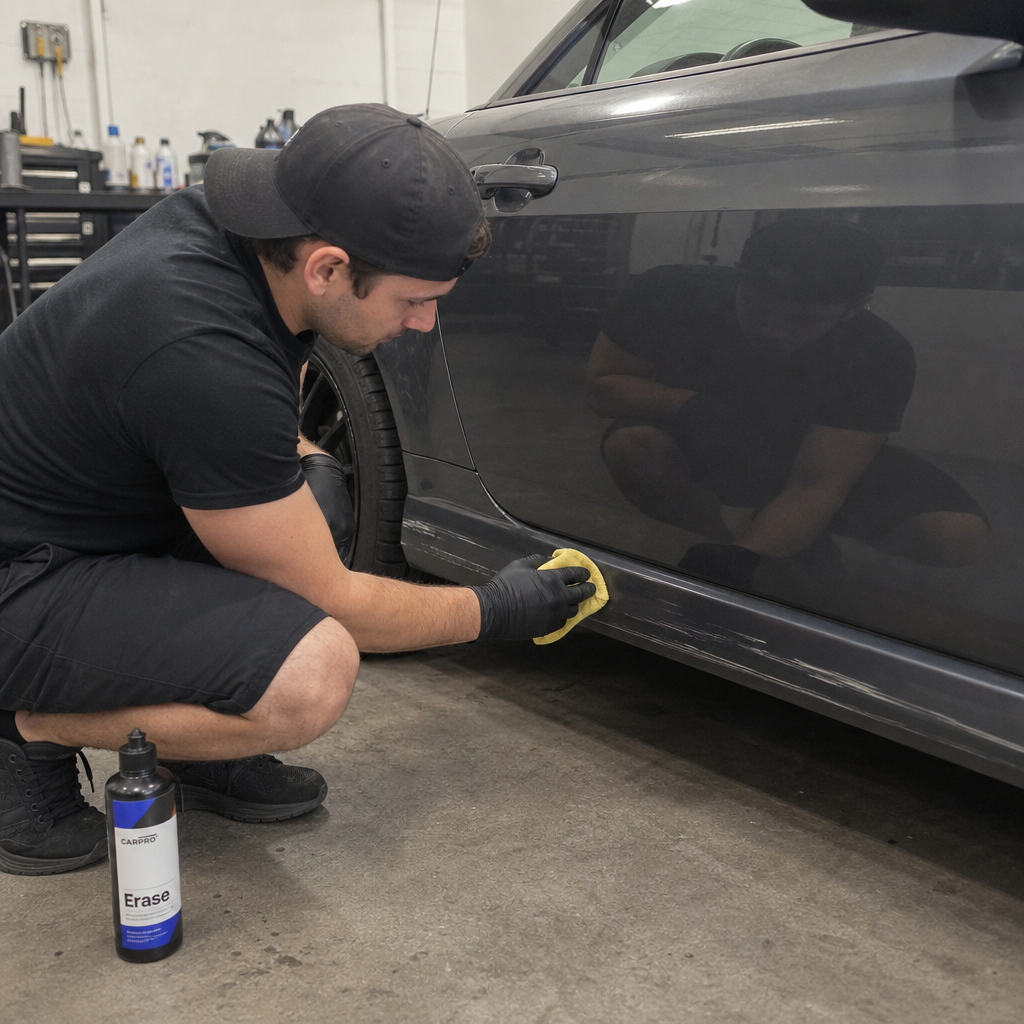
Perhaps the most stubborn byproduct of a track day is the black rubber streaks left on your doors and rear quarters. Removing track rubber from car paint requires patience and the right chemicals. Do not use an abrasive sponge, as this will heavily scratch the clear coat.
Instead, employ a dedicated tar and glue remover or a specialist track rubber scuff removal product.
- Spray the solvent directly onto the rubber streaks.
- Allow it to sit for 60 to 90 seconds (ensure you are out of direct sunlight).
- The solvent will break down the polymers in the tyre rubber, melting it into a wipeable liquid.
- Gently wipe the area with a plush, clean microfibre cloth. If the rubber is particularly thick, you may need a second application. Never scrub aggressively.
3. The Safe Contact Wash
Once the rubber and heavy grit are removed, proceed with a standard two-bucket contact wash using a high-lubricity car shampoo. This ensures any remaining microscopic debris is safely lifted away without inflicting swirl marks into your pristine paint.
4. Re-protect the Paintwork
Track driving generates immense heat, which can degrade traditional waxes and sealants much faster than normal road driving. After your post-track wash, apply a fresh layer of your preferred spray sealant, wax, or ceramic boost spray to replenish the car’s sacrificial barrier before its next outing.
Conclusion
Taking your car to a racing circuit is the ultimate expression of automotive enthusiasm. It tests your skills as a driver and the mechanical limits of your machine. However, the resulting cosmetic damage does not have to be a permanent penalty for your passion.
By implementing a dedicated track day paint protection plan for drivers who push their cars hard, you can hit the apex with absolute confidence. Whether you opt for a heavy-duty, self-healing permanent film, or prefer the ritual of applying temporary protective tapes the night before an event, preparation is the key to preservation.
Treat your exterior with the same respect you give to your engine and brakes. By doing so, you will ensure that your vehicle remains as flawless on the concours lawn as it is fiercely capable on the tarmac. See you out on the circuit!