
Picture this: you are cruising down the motorway in your absolute pride and joy. The engine sounds brilliant, the handling is crisp, and the fresh polish is gleaming under the afternoon sun. Suddenly, you hear it—that sharp, stomach-churning crack of a stone striking your bonnet. It is a motorist’s worst nightmare, and the damage is instantaneous.
For modern drivers, understanding how front end PPF protects the most vulnerable paintwork on your car is absolutely essential. Whether you have just purchased a brand-new vehicle or treated your current car to a full respray, preserving that flawless finish is likely your top priority.
In this comprehensive guide, we will explore exactly how front end paint protection film (PPF) acts as an invisible shield, diving into the science, the installation, and why it is the ultimate investment for your vehicle.
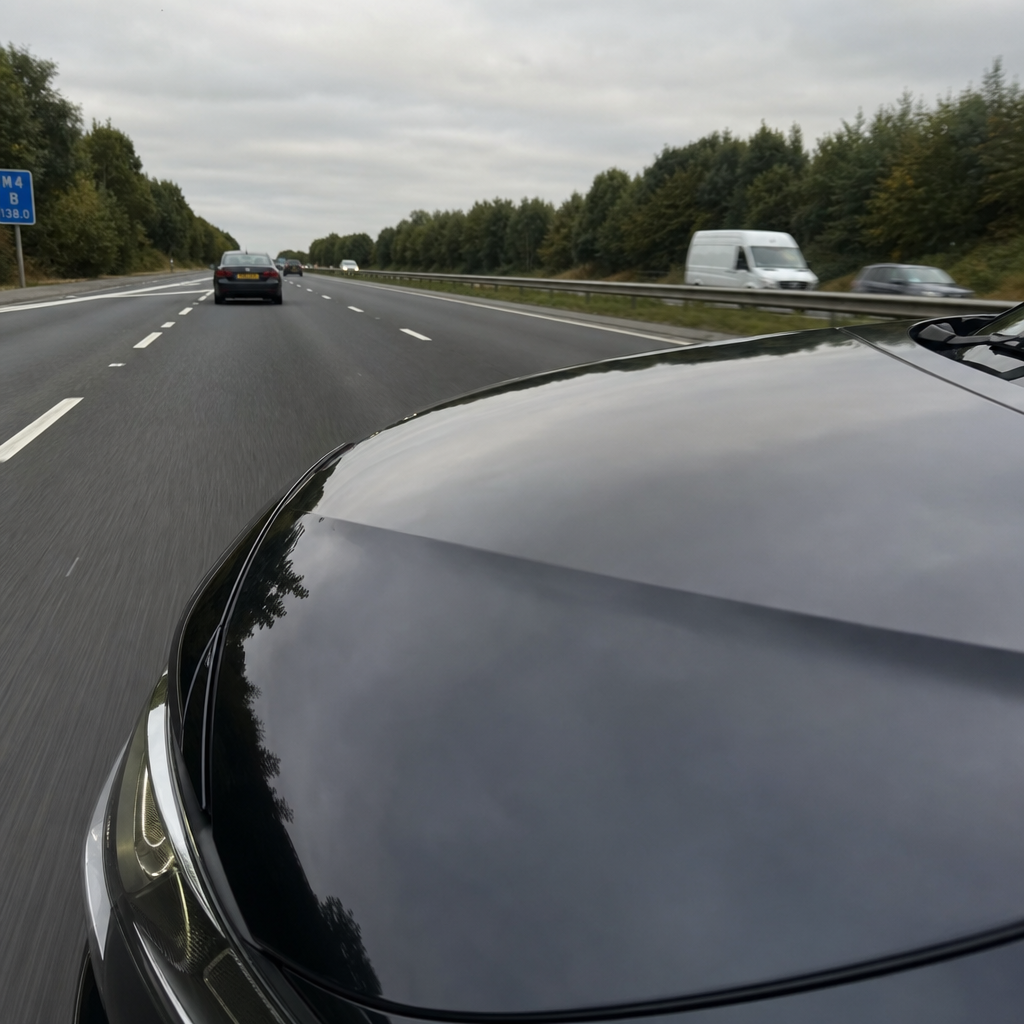
The Danger Zone: Why the Front End Takes the Hardest Hits
When travelling at 70 mph, the front of your car acts like a battering ram against the elements. The impact of road debris on vehicle paint cannot be overstated. From loose gravel and grit flicked up by lorries to acidic bug splatters and winter road salt, the daily onslaught is relentless.
Automotive specialists categorise the front bumper, bonnet, front wings, and wing mirrors as the high-impact areas on car exterior. Because these panels lead the vehicle, they absorb the kinetic energy of flying debris head-on. Without adequate car paint protection, this constant barrage quickly leads to unsightly pitting, flaking clear coat, and deep gouges that expose bare metal to rust.
When it comes to preventing rock chips on front bumper plastics and bonnet panels, traditional waxes and sealants simply do not have the physical mass to absorb a high-speed strike. This is exactly where modern protective films step in.
What is Paint Protection Film (PPF)?
Paint protection film—often colloquially known in the detailing industry as a “clear bra”—is a highly advanced, micro-thin layer of ultra-durable plastic applied directly over your vehicle’s bodywork.
But this isn’t just any standard plastic. The magic lies within the aliphatic thermoplastic polyurethane characteristics. Aliphatic TPU is a highly sophisticated polymer known for its incredible tensile strength, elasticity, and optical clarity. Unlike older generations of protective films that would turn yellow and brittle over time, aliphatic polyurethane remains crystal clear and highly resistant to environmental degradation.
The Magic of Heat: Self-Healing Technology
Perhaps the most fascinating technological leap in modern vehicle care is the self-healing properties of clear bra films.
The top layer of a premium PPF consists of an elastomeric polymer. If the film gets lightly scratched by a poorly washed microfibre cloth, a rogue branch, or general road grit, it doesn’t remain permanently scarred. When exposed to heat—either from the sun, the car’s engine, or a detailer’s heat gun—the polymer molecules literally rearrange themselves back to their original state. The scratch vanishes before your eyes, leaving the surface smooth and glossy once more.
Furthermore, these films offer exceptional UV ray protection for automotive paintwork. The harsh British sun (when it does decide to shine) can cause unprotected clear coats to oxidise and bright colours—particularly reds and blacks—to fade. PPF effectively blocks harmful UV radiation, ensuring the factory paint retains its original depth and richness for years.
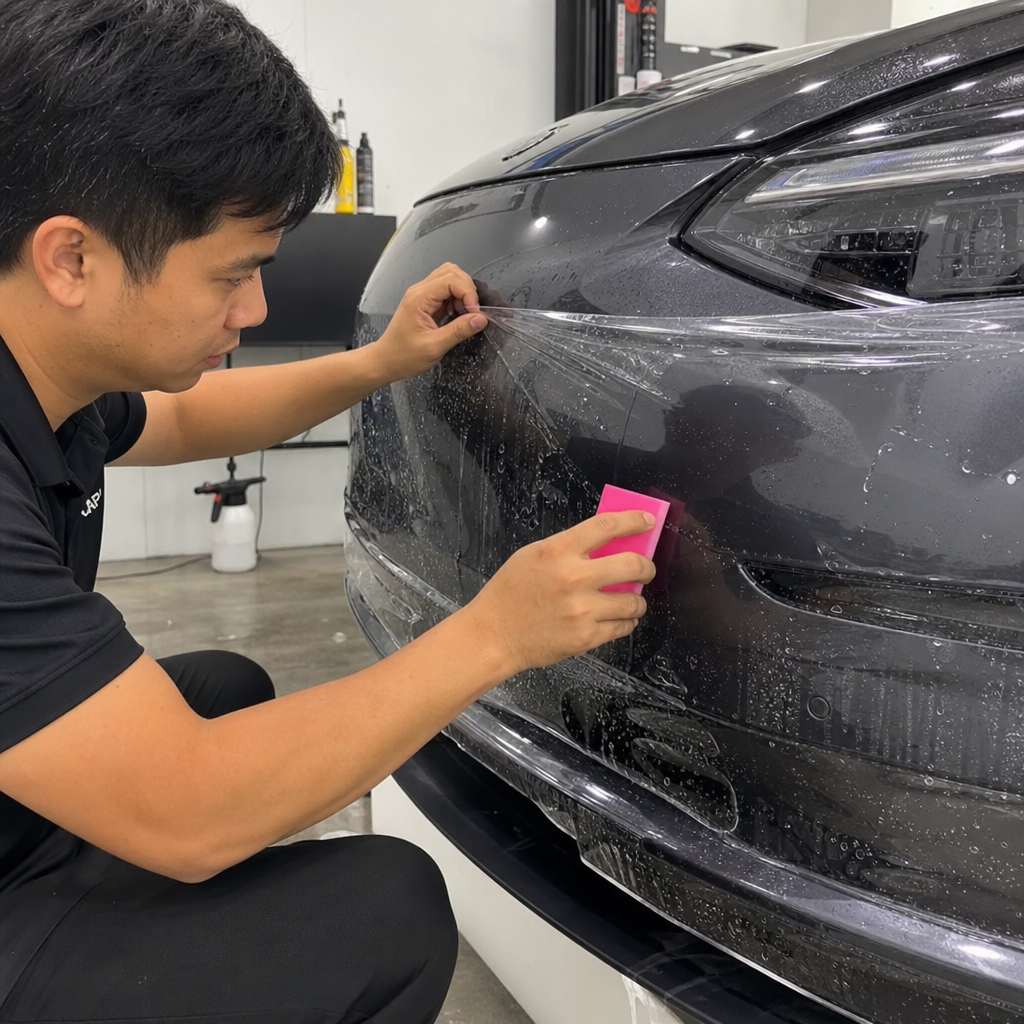
Coverage Options: Tailoring Your Shield
When choosing paint protection film for stone chips, you do not necessarily have to wrap the entire vehicle. Because the rear and sides of the car are at a significantly lower risk of direct, high-speed stone strikes, many owners opt to protect just the leading edges.
When deciding between partial front vs full front coverage, it helps to understand what each package typically includes:
- Partial Front Coverage: This usually covers the front bumper, the front quarter of the bonnet, the front sections of the front wings, and the wing mirrors. It is a budget-friendly option that protects the most critical strike zones. However, it does leave a visible horizontal seam across the bonnet where the film ends, which can collect wax and dirt over time.
- Full Front Coverage: This is the most popular choice for premium vehicles. It covers the entire front bumper, the full bonnet (with edges wrapped underneath so no seams are visible), the full front wings, and the wing mirrors. It offers comprehensive, seamless protection without altering the aesthetic of the car.
PPF vs Alternative Protections
A frequent debate in the detailing world is PPF vs ceramic coating for impact resistance.
Ceramic coatings are fantastic. They utilise nanotechnology to bond with your clear coat, providing incredible water beading (hydrophobicity), brilliant gloss, and protection against chemical etching from bird droppings. However, a ceramic coating is measured in nanometres. It is microscopic.
If a piece of gravel hits a ceramic-coated bumper at 60 mph, it will punch straight through the coating and chip the paint. Ceramic coatings offer absolutely zero impact resistance.
PPF, on the other hand, is significantly thicker (usually around 8 mils or 200 microns). It acts as a physical trampoline, absorbing and dissipating the kinetic energy of a stone. For genuine impact protection, PPF is the only viable solution. Many car owners actually choose to apply a ceramic coating over their PPF to get the best of both worlds: extreme physical protection paired with effortless cleaning.
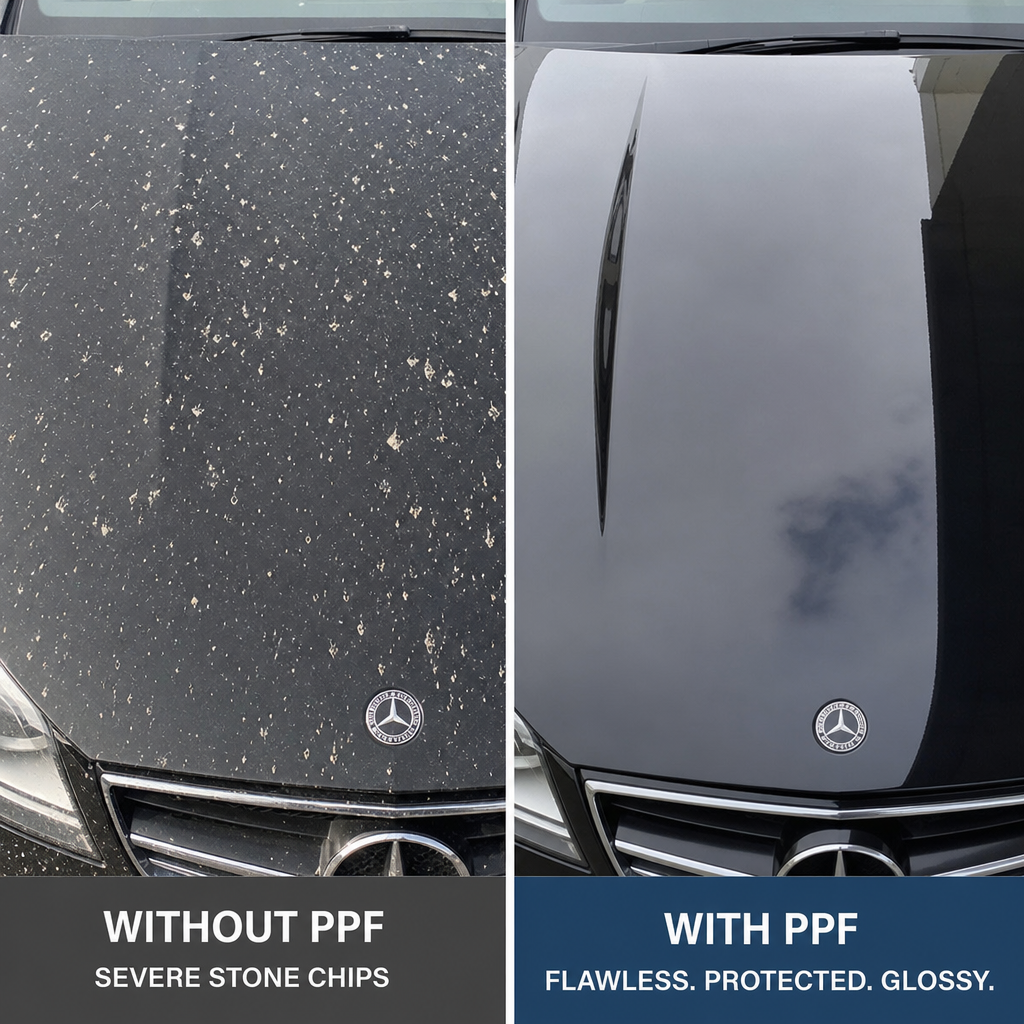
The Investment: Is Front End PPF Worth the Money?
Protecting your car’s front end is a financial commitment, prompting many owners to conduct a cost benefit analysis of front end PPF.
A professional full-front installation can cost anywhere from £1,000 to £2,000, depending on the size of the vehicle and the complexity of the body panels. While this might seem steep initially, it is vital to weigh it against the alternatives.
Repainting a modern car is incredibly expensive. Matching metallic or pearlescent factory paint perfectly on a front bumper and bonnet often costs more than the PPF installation itself. Furthermore, a resprayed panel is never quite the same as a factory finish, and sophisticated paint depth gauges used by modern car buyers will easily detect non-original paint.
This brings us to maintaining vehicle resale value with paint film. When you decide to sell your car or hand back a leased vehicle, a pristine front end free of “road rash” dramatically increases its market appeal. Dealerships routinely deduct hundreds, if not thousands, of pounds from part-exchange valuations for heavily stone-chipped front ends. By preserving the factory paint, the PPF virtually pays for itself at the point of sale.
Add to this the long-term durability of car protection film—which typically comes with a manufacturer warranty spanning 5 to 10 years—and the return on investment becomes incredibly compelling.
The Professional Installation Process
You might be wondering about the journey your car takes once you hand over the keys. The professional clear bra installation process is meticulous and requires a highly controlled environment.
- Extensive Decontamination: The vehicle is comprehensively washed, chemically decontaminated to remove iron fallout and tar, and then clay-barred. Even the tiniest speck of dust will show up like a boulder under the film.
- Paint Correction: The paintwork is machine polished. Because the film locks in whatever is beneath it, the installer must ensure the paint is absolutely flawless before application.
- Pattern Cutting: Using advanced software, the installer cuts the film using a digital plotter to match the exact dimensions of your specific make and model.
- Application: Using a combination of slip solution (usually baby shampoo and water) and tack solution (alcohol and water), the film is precisely floated onto the panel, stretched over the contours, and squeegeed flat to remove all moisture and air.
- Curing: The vehicle is left in a warm environment to allow the adhesive to fully bond to the clear coat.
A Common Question: Can PPF Be Applied Over Scratched Paint?
Many owners ask: can PPF be applied over scratched paint? Technically, yes, the adhesive will stick. Furthermore, the adhesive layer of the film actually works to fill in very minor swirl marks, sometimes making the paint look slightly better.
However, if you have deep scratches, swirl marks, or existing stone chips, the film will magnify them. Applying a premium, expensive film over damaged, untreated paint is generally considered a false economy. A reputable installer will always recommend a proper stage-one or stage-two machine polish to remove existing defects prior to laying the film.
Caring for Your Protected Car
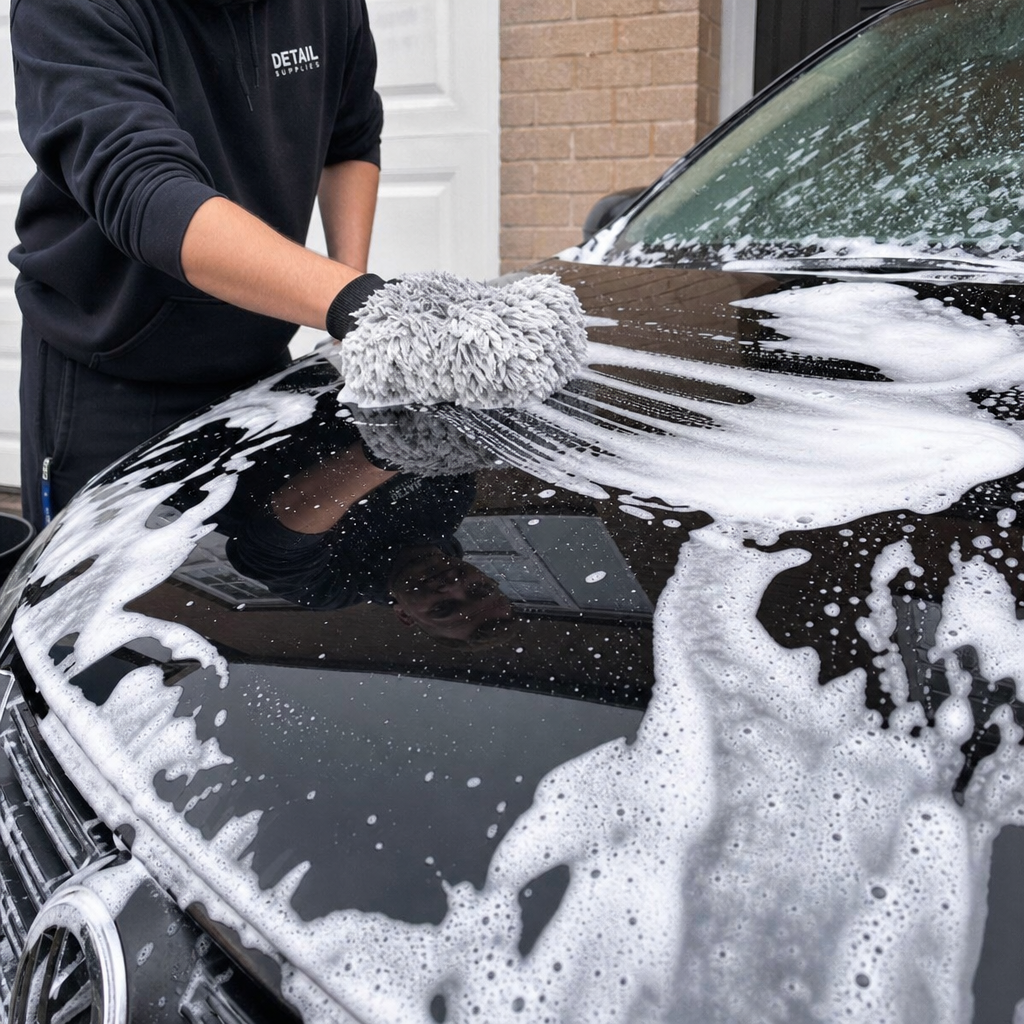
Once your vehicle is wrapped, maintaining it is surprisingly straightforward, but you do need to know how to wash a car with PPF safely to prolong its life.
- Use the Two-Bucket Method: Always use one bucket for your car shampoo and a separate bucket for rinsing your wash mitt. This prevents dragging dirt back across the film.
- Mind the Edges: If you use a pressure washer, keep the lance at least 12 to 18 inches away from the surface, and never point it directly at a panel edge or seam. High-pressure water can force its way under the film and lift it.
- Avoid Harsh Chemicals: Do not use abrasive polishes, heavy cutting compounds, or acidic cleaners on the film. A pH-neutral car shampoo is all you need.
- Top it up: Apply a silica-based (SiO2) spray sealant or a dedicated PPF wax every few months. This keeps the film slick, enhances the self-healing properties, and makes routine washing much easier.
Final Thoughts
The open road should be a place of enjoyment, not anxiety. Spending your motorway journeys wincing at every passing lorry is no way to experience your pride and joy.
By understanding how front end PPF protects the most vulnerable paintwork on your car, you empower yourself to make the best decision for your vehicle’s longevity. Through advanced aliphatic TPU technology, incredible impact absorption, and remarkable self-healing properties, paint protection film stands unchallenged as the ultimate safeguard for modern automobiles.
It is an investment in peace of mind, ensuring that years from now, your car will look just as spectacular as the day it rolled out of the showroom.