
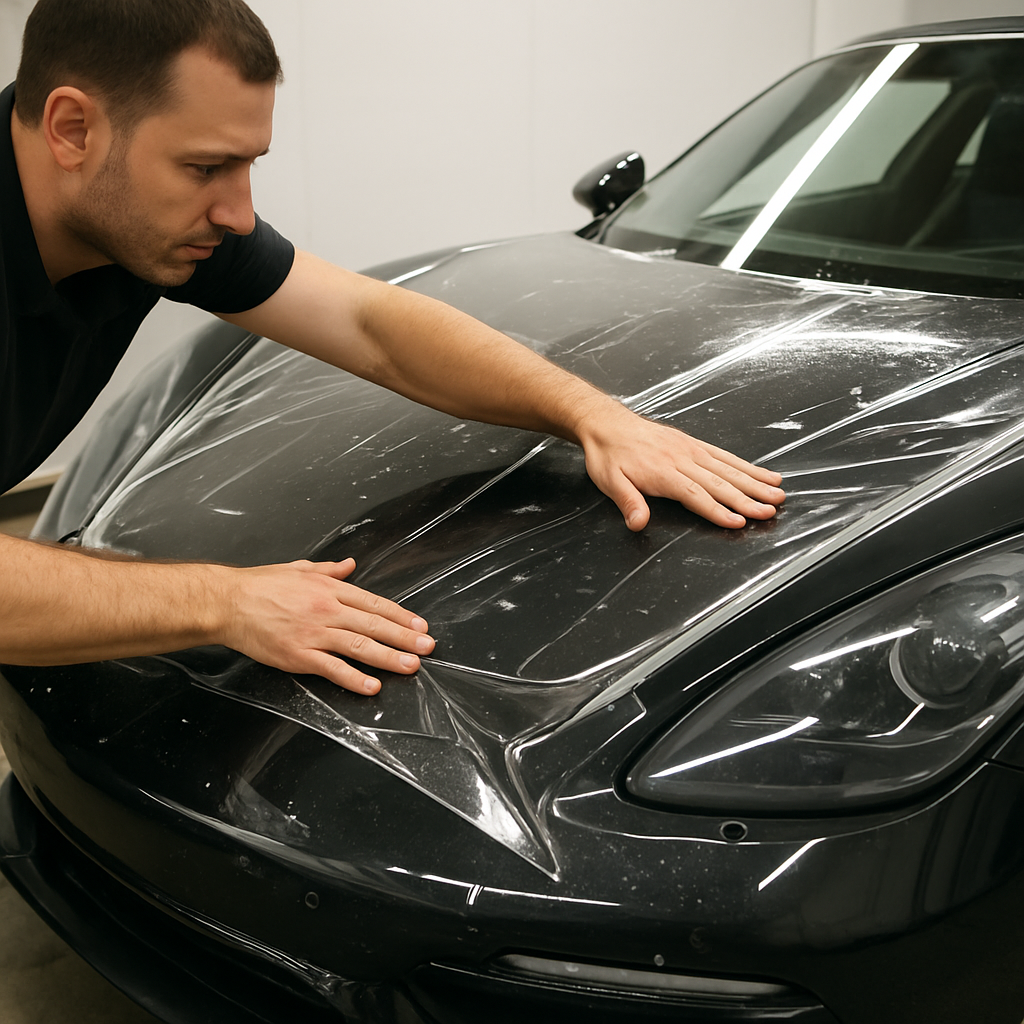
Paint protection film can be a smart way to protect a car’s paint from stone chips, road grime, light scuffs and daily wear, especially on exposed areas such as the bumper, bonnet, wings and mirrors. DIY paint protection film kits can look tempting, since online tutorials make the process seem quick and the upfront saving is real.
But fitting film neatly is a hands-on skill that depends on cutting accuracy, surface preparation, controlled conditions and patient finishing. For many UK car owners, the real choice isn’t simply “DIY or professional,” but whether the risk of a poor finish is worth the saving.
What makes DIY PPF harder than it looks?
DIY PPF is tricky because the film has to be aligned, stretched, smoothed and sealed across curved painted panels without trapping dust, air or moisture underneath. A kit may arrive pre-cut, but the car still needs careful cleaning, the film still needs controlled handling, and every edge still needs to sit properly. Small errors can become highly visible once the film dries, particularly on darker paint or complex front-end panels.
The challenge is that PPF isn’t like applying a sticker. A modern PPF car installation involves tension, slip solution, tack solution, squeegee pressure and constant checking from several angles. Professional installers often use heat guns to settle the film into curves, plus cutting software or plotters for patterns matched to the vehicle. Pull the film too much and it may distort; too little and it may bunch, crease or lift at the edges.
DIY kits and professional installation serve different needs
A DIY kit can suit an owner who’s patient, realistic and comfortable working slowly on simpler areas, such as flat door cups or small sill sections. It may also suit someone after basic protection rather than a near-invisible finish. The main limitation is that preparation, fitting and correcting mistakes all sit with you.
Professional installation is different because the film is fitted by someone who works with paintwork shape, panel edges and dirt control every day. A paint protection film installer will usually assess which panels need coverage, prepare the surfaces properly, and use suitable patterns or cutting methods for the vehicle. That’s why many owners choose professional PPF installation when protecting higher-value cars, newer paintwork or large front-end areas.
Precision cutting and pattern fitting
The best-looking PPF depends on how well the film matches the panel. Even pre-cut DIY paint protection film patterns can need careful positioning, since bumpers, parking sensors, badges, washers and trim lines leave little room for error. A few millimetres out can mean a visible gap, an exposed edge or film sitting too close to a contour.
Professional PPF installers understand how film behaves as it’s stretched across curves. This matters on bonnets, front bumpers and wings, where a flat sheet must settle onto a three-dimensional surface. Poor alignment can lead to tension marks, fingers at the edge, or sections that slowly lift after application.
If you’re mainly concerned about stone chips, focus on getting the most vulnerable areas covered properly rather than covering random panels badly. Good placement is often more useful than trying to cover too much without the right conditions.
Bubble-free application takes more than patience
A clean finish depends on how air, liquid and pressure are managed under the film. Bubbles can form when the surface isn’t clean, when too much solution is left behind, or when the squeegee angle pushes liquid into trapped pockets. Some small moisture marks may settle, but dirt nibs and creases generally don’t disappear on their own.
Common DIY risks include:
- Dust under the film: tiny particles can show as bumps once the film bonds to the paint
- Silvering or hazy patches: poor pressure or trapped solution can leave visible marks
- Overstretching: pulling the film too hard can distort the pattern or create stress at the edges
- Creases: once a crease forms, it can be difficult to remove cleanly
- Paint or trim damage: cutting too close to the car without skill can mark the surface
A ceramic or PPF coating may help with slickness and cleaning once protection is in place, but it doesn’t fix a bad film installation. The quality of the film fit still comes first.
Tools and workspace conditions matter
DIY PPF is far easier in a clean, calm and well-lit space. Wind, dust, low light and changing temperature all make the job harder. This is one reason mobile or driveway work can be challenging: the installer has less control over airborne dirt, weather and lighting.
A basic setup usually needs:
- A clean indoor workspace with good lighting
- A thorough wash and clean-down before fitting, to remove grease and loose dirt
- Slip and tack solutions suitable for the film
- Soft squeegees designed for PPF
- Clean spray bottles and lint-free cloths
- Safe trimming tools, used with great care
- Enough time to work slowly without rushing
Signatia, a Surrey-based specialist, offers professional PPF installation in a dedicated in-facility environment rather than a mobile setting. That controlled space supports better results and keeps the film away from airborne dirt while it’s being applied.
Edge sealing decides how long the finish looks neat
Edges are where many DIY installs reveal themselves. If an edge is dirty, wet, overstretched or not properly seated, it can collect grime or begin to lift. Corners, parking sensor cut-outs, wheel arch edges and bumper returns are especially demanding because the film must hold its shape around tight curves.
A professional installer will usually spend significant time on these finishing details, aiming not just for a good look on day one but for edges that stay clean and sealed. For UK roads, where rain, grit and frequent washing are part of ownership, edge work matters a great deal.
It’s also worth knowing that a botched DIY job often costs more to fix than booking a professional from the outset, since poorly fitted film usually has to be removed before a fresh install can go ahead.
How should you choose a paint protection film installer?
Choose a paint protection film installer by looking at their environment, preparation process, panel coverage options and willingness to explain what’s realistic for your car. A good installer should help you understand the difference between partial coverage, front-end coverage and more extensive packages without pushing you into unnecessary work.
Useful things to ask include:
- Do you install in a controlled indoor facility?
- Which areas of my car are most exposed to chips and road debris?
- Will the film be pre-cut, custom-fitted, or a mix of both?
- How do you prepare paint before installation?
- How are edges wrapped or finished where possible?
- What aftercare should I follow once the film is fitted?
The right answer isn’t always the most expensive or most extensive option. It’s the one that matches how you use the car, where you drive, and how important finish quality is to you.
Short FAQ
Is DIY PPF worth trying, or is it better left to a professional?
DIY PPF can be worth trying on small, simple areas if you accept that the finish may not match professional work. For large panels, curved bumpers or visible front-end protection, the risk of bubbles, dust and poor edges is much higher.
Is PPF the same as a coating?
No. PPF is a physical film applied to the paint, while a coating is a liquid product that cures on the surface. Some owners use both, but they serve different roles.
Can I install PPF outside?
It’s possible, but not ideal. Outdoor work increases the risk of dust, wind, moisture and changing light affecting the finish.
A fair verdict for UK car owners
DIY PPF has a place, especially for small areas and hands-on owners who enjoy careful detailing work. But full panels and front-end protection demand precision, clean conditions and experience. If you want the film to look discreet and protect the right areas properly, professional installation is usually the safer route.
If you’re in Surrey or nearby, Signatia can help you compare sensible coverage options and get your free quote without guesswork.
Get in touch with Signatia for a free quote on professional PPF installation.