
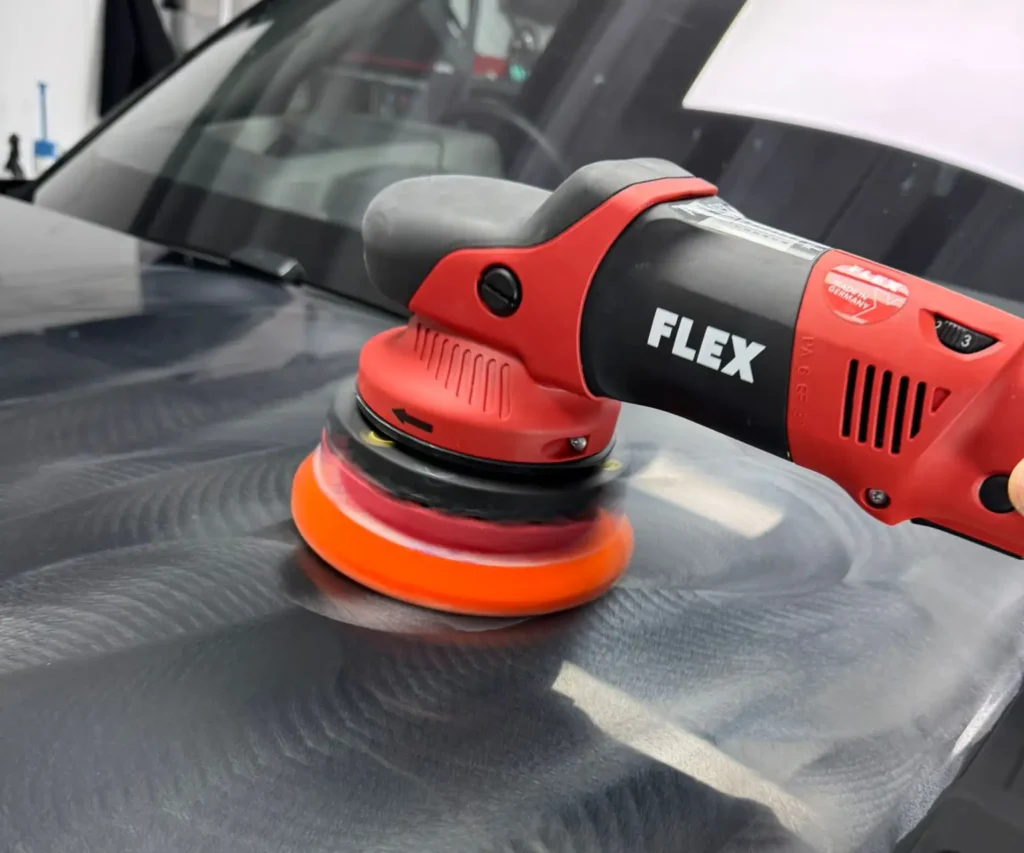
If your car looks clean but still shows swirl marks, light scratches or a grey, tired finish in the sun, the issue is probably in the paint surface rather than the wash. Paint correction is the careful process of improving that surface before you add wax, ceramic coating or PPF. For car owners around Guildford, Woking and Surrey, it’s the difference between covering up dull paint for a while and preparing it properly for a sharper, longer-lasting finish.
What is paint correction?
Paint correction is a controlled polishing process that removes or reduces visible defects in the clear coat, things like swirl marks, fine scratches, oxidation and wash marring. Most modern cars have a coloured base coat protected by a clear top layer, and when that layer gets marked by poor washing, roadside grime, automatic car washes or everyday use, light scatters unevenly and the paint loses its gloss. Rotating brushes at automated washes are a common culprit, along with years of wiping the same panel with a dirty cloth.
In plain English, machine polishing works by gradually levelling a tiny amount of the clear coat around the defect. It’s not just filling in marks with oils or glaze. A professional chooses suitable polishing pads, compounds and machine settings so the surface becomes more even, which lets light reflect more cleanly.
That’s why car paint correction is often recommended before applying protection. If the defects remain underneath, the wax, coating or film may end up protecting a finish you’re not fully happy with.
Why does paint correction matter before wax, ceramic coating or PPF?
Paint correction matters because protection locks in the condition of the paint at the point it’s applied. Wax, ceramic coating and PPF each play a role, but none of them are a shortcut for correcting visible paint defects. If your bonnet is covered in swirls before application, those swirls will still be visible afterwards.
Wax can add warmth and short-term gloss, but it isn’t designed to remove deeper wash marks. Ceramic coating adds durable protection and easier maintenance, though it needs a properly prepared surface to look its best. PPF, or paint protection film, is fitted to protect vulnerable areas from road rash and impact marks, but preparation still matters, since the underlying finish affects how it all looks in the end.
If you’re weighing up wax against ceramic protection, Signatia has a useful guide on whether car wax is still worth it or ceramic coating has replaced it. The key point is simple: correct first, protect second.
Paint correction is not the same as valet-style polishing
Many car owners first hear about polishing through valeting packages. A valet-style polish can improve gloss quickly and might make the paint look fresher for a short period, but it often focuses on presentation rather than deeper paintwork correction.
Proper auto paint correction is more measured. The detailer inspects the paint, works out the type and severity of any defects, then picks an approach that balances improvement with keeping the paint safe. The goal isn’t to chase every mark at any cost, but to enhance clarity while preserving the clear coat.
Think of valet polishing as tidying the appearance, and professional paintwork correction as assessing and refining the actual surface. Both have a place, but they aren’t the same service.
What a professional paint correction service generally involves
A professional service usually starts with a safe wash and a stage to remove bonded dirt, tar and other grime, so nothing interferes with polishing later. The car is then inspected under suitable lighting, since many swirl marks only show clearly when the light hits the panel at the right angle.
Where relevant, paint depth checks may be taken to understand how much clear coat is available. This is especially useful on older cars, repainted panels or vehicles with an unknown polishing history, and it supports better decision-making rather than guesswork.
From there, the detailer may run a test section to see which pad and polish combination gives the right balance of cut and finish. Some cars only need a lighter refining stage, while others benefit from multi-stage polishing across several passes. Softer paints tend to mark easily but correct quickly, while harder paints often need more careful, patient work to achieve the same visible improvement.
Signatia is a Surrey-based detailing specialist offering paint correction services, ceramic coating and PPF for drivers in Guildford, Woking and across Surrey. Their approach centres on proper assessment and professional application, rather than treating every car as if it needs the same process.
Signs your car may need paintwork correction
You don’t need to be a detailing expert to spot when paint correction may help. Look at the car after a careful wash, ideally in direct sunlight or under strong garage lighting.
Common signs include:
- Circular swirl marks that appear around the sun’s reflection
- Light scratches from washing, drying or brushing against the paint
- Dullness on upper panels such as the bonnet, roof and boot lid
- Hazy reflections where the paint should look crisp
- Previous polishing marks or holograms, especially on darker cars
- A clean car that still looks flat rather than glossy
These issues are common on daily driven cars in the UK. Surrey lanes, winter grime, tree sap, bird mess and repeated hand washes all take their toll on the finish over time, often without the owner realising until the paint is inspected closely. Paint correction helps restore visual clarity before protection is applied.
How to polish your car safely at home
If you’re researching how to polish your car, start with caution. Hand polishing can improve mild dullness, but it has limited ability to correct clear coat defects evenly. Machine polishing is more effective, though it also needs the right products, technique and judgement to get right.
For anyone learning how to polish a car, the safest starting point is preparation. Wash thoroughly, remove any bonded grime, work on cool panels, and avoid aggressive products unless you understand how they behave. Don’t keep polishing the same area over and over in the hope that a deep scratch will disappear.
A useful rule of thumb: if your fingernail catches in a scratch, polishing may reduce how visible it is but probably won’t remove it safely. At that point, a professional inspection is the sensible next step.
Common questions from Surrey car owners
Will paint correction remove every scratch? Not always. Paint correction works best on defects within the clear coat, such as swirls, haze and many light scratches. Deeper damage may only be improved, not fully removed, if removing it would compromise the paint underneath.
Should I correct paint on a new car? Sometimes, yes. New cars can pick up wash marks, transport marring or dealership preparation marks before they’re even delivered. An inspection will show whether correction is worth doing before ceramic coating or PPF.
Is paint correction the same as ceramic coating? No. Correction improves the condition of the existing paint by reducing surface defects, while ceramic coating adds a protective layer on top once the paint is in good shape. Many owners choose to correct first and coat afterwards, though it depends on the car and what you’re trying to achieve.
Is paint correction worth it before selling a car? It can help the car present better, especially if dull paint is letting it down. That said, the right level of work depends on the vehicle, its condition and what you’re hoping to get out of it.
A better finish starts with the right assessment
Paint correction isn’t about chasing perfection for every vehicle. It’s about understanding what your paint actually needs, improving it safely, and choosing the right protection afterwards. For some cars, that might mean a light enhancement before wax; for others, it could mean more involved car paintwork correction before ceramic coating or PPF.
If your car in Guildford, Woking or elsewhere in Surrey looks dull despite regular washing, a professional assessment can help you work out what’s realistic and worthwhile. Get in touch with Signatia to discuss whether paint correction is right for your car.